
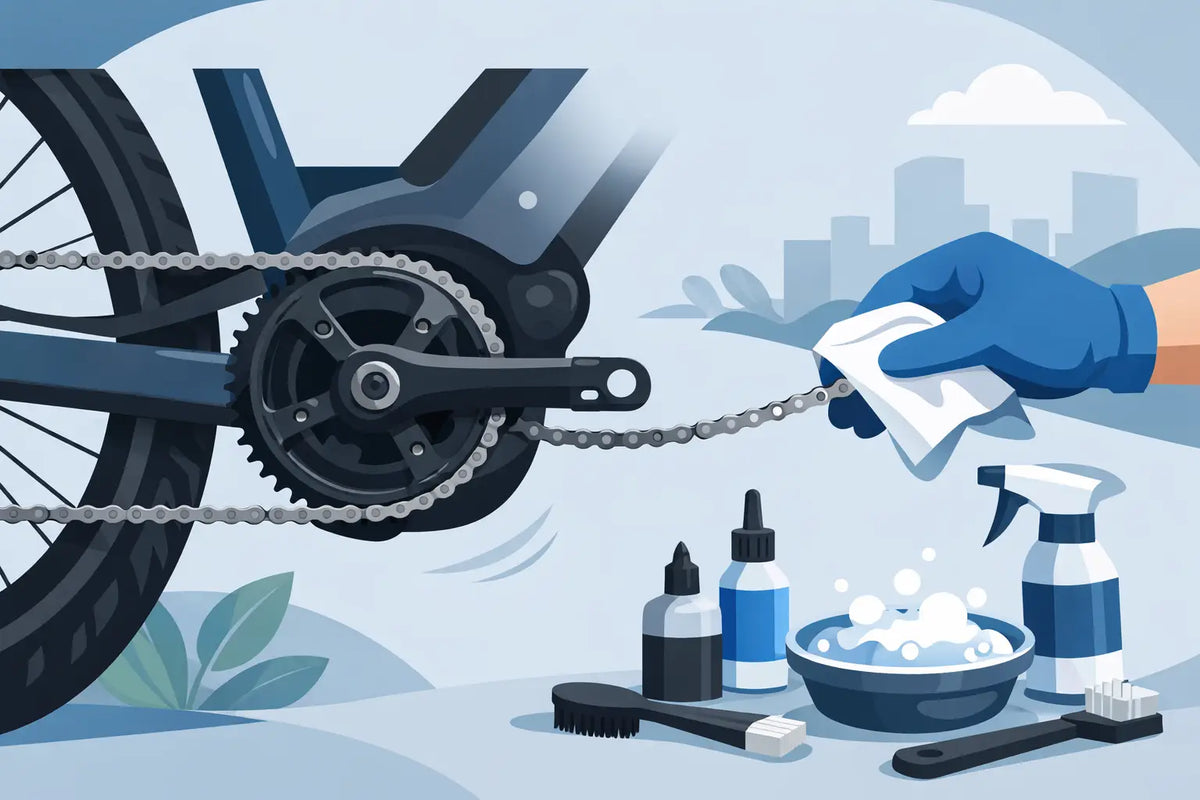
A clean electric bike drivetrain is not a cosmetic detail. On a powerful e-bike, the chain, cassette, derailleur, and chainring handle more torque than a typical pedal bike, often through rain, road grit, steep climbs, and stop-start city miles. Leave abrasive grime in place and the bike can get noisy, shift poorly, waste power, and wear through expensive parts far sooner than it should.
For riders who expect serious range, crisp response, and durable performance, drivetrain care is basic ownership discipline. The goal is not to make the bike look showroom-clean after every ride. It is to remove contamination before it becomes grinding paste, then apply the right lubricant in the right amount.
Why E-Bike Drivetrains Get Dirty Faster
E-bike drivetrains do not necessarily get dirty because they are electric. They get dirty faster because many riders cover more miles, ride in higher gears, and put more force through the chain. Motor assistance magnifies the load at the chainring and cassette, especially when climbing or accelerating hard from a stop.
Road spray adds water, dust, salt, and fine sand. Chain lube holds onto that material. Once mixed together, it becomes an abrasive compound working its way into chain rollers, cassette teeth, jockey wheels, and chainring profiles. That is why a drivetrain can look only mildly dirty but still feel rough under power.
A little drivetrain noise after a wet commute is normal. A persistent grinding sound, delayed shifts, chain skipping, or a black crust around the pulley wheels is not. Those signs usually mean the system needs cleaning, lubrication, adjustment, or a closer inspection for wear.
What You Need to Clean an Electric Bike Drivetrain
You do not need an oversized workbench or a collection of specialty chemicals. A practical setup includes a bike-safe degreaser, a soft brush, a narrow drivetrain brush or old toothbrush, clean lint-free rags, water from a low-pressure source, and a chain lubricant suited to your riding conditions.
Use a dry or wax-based lube for predominantly dry, dusty conditions. It tends to attract less dirt, but it may need more frequent application. Wet lube lasts longer in rain and puddles, though it can build up grime quickly if applied too heavily. There is no single correct lube for every rider. Match it to the weather, terrain, and how often you are willing to clean.
Avoid gasoline, harsh solvents, and aggressive all-purpose cleaners near seals, bearings, brake rotors, painted surfaces, and electrical connections. A pressure washer is equally risky. High-pressure water can force contamination past bearing seals and into sensitive areas where it does not belong.
Protect the bike before you start
Turn the e-bike off and remove the battery if the manufacturer allows it. This is not always required for a basic clean, but it prevents accidental activation and keeps the battery away from dripping cleaner. Cover the display and charging port if needed, particularly when working outdoors.
Shift into a middle cassette gear before cleaning. This keeps the chain line reasonably straight and makes it easier to access the cassette and derailleur. If you use a stand, support the bike correctly and keep the rear wheel free to turn. If not, a stable kickstand and patient hand-rotation of the pedals will do the job.
How to Clean an Electric Bike Drivetrain Properly
Start by wiping the chain with a dry rag. Hold the rag loosely around the lower run of chain and rotate the cranks backward. This first pass removes loose surface dirt and tells you how contaminated the drivetrain really is. If the rag comes away black immediately, do not just add more lubricant. Clean first.
Apply degreaser directly to the chain, cassette, chainring, and derailleur pulley wheels. Use enough to wet the dirty surfaces, not enough to soak the entire bike. Let it sit for the time recommended on the product label. A few minutes is usually enough. Letting degreaser dry on the drivetrain makes the job harder, not better.
Brush the chain while rotating the cranks backward. Work around the cassette cogs, especially the gaps between them, then clean the chainring teeth and pulley wheels. The pulley wheels deserve attention because they collect dense deposits that can affect chain tracking and shifting quality.
Rinse with a light stream of water or wipe repeatedly with a damp rag. Keep water flow controlled around the motor area, bottom bracket, axle bearings, headset, display, and battery contacts. You are rinsing away cleaner and grit, not pressure-washing a mountain bike after a mud race.
Dry the drivetrain thoroughly with clean rags. Rotate the cranks backward and wipe the chain until the rag no longer picks up moisture or residue. Water left inside the rollers can dilute fresh lube and encourage corrosion, particularly if the bike is stored in a garage, shed, or humid area.
Lubricate the chain, not the entire drivetrain
Apply one small drop of lubricant to each chain roller while rotating the cranks backward. The rollers are the moving surfaces that need lubrication. Coating the outside plates, cassette, or chainring does not make the drivetrain run better. It creates a magnet for grit.
After applying lube, rotate the cranks for several revolutions to distribute it. Then wait a few minutes and wipe the outside of the chain firmly with a clean rag. This is where many riders go wrong. A properly lubricated chain should feel smooth, not wet and shiny with excess oil.
Do not spray lubricant toward the drivetrain while the rear wheel is spinning at speed. It is messy, inaccurate, and raises the risk of contaminating the brake rotor or pads. If lubricant reaches a rotor, clean it immediately with a brake-specific cleaner and inspect the pads for noise or reduced braking performance.
Clean More Often When Conditions Demand It
Mileage is only part of the maintenance schedule. A bike ridden 100 dry miles on clean pavement may need less attention than one ridden 20 miles through wet roads, construction dust, or salted winter streets. Listen to the bike and inspect it regularly.
For most urban and recreational e-bike riders, wiping and relubing the chain every 100 to 150 miles is a sensible baseline. A deeper clean may be needed every 250 to 500 miles, depending on conditions. After a wet ride, do not wait for the next scheduled service. Dry the chain and address it before surface rust begins.
Riders who use their e-bike for daily transportation should make the drivetrain part of their weekly check. Look for black residue on the chain, packed dirt on pulley wheels, rust spots, stiff links, and unusual cassette wear. This takes a minute and can prevent a costly replacement later.
Do Not Clean Away a Mechanical Problem
A clean drivetrain cannot compensate for a worn chain, bent derailleur hanger, damaged cassette, or poorly indexed gears. If the chain skips under hard motor-assisted acceleration, do not assume it only needs lube. Skipping under load can point to chain and cassette wear, especially on an e-bike that has covered substantial mileage.
Check chain wear with a proper chain gauge. Replacing a chain before it becomes excessively elongated helps preserve the cassette and chainring. On a high-torque bike, that small maintenance decision can save a much larger parts bill.
Also inspect the derailleur hanger after a tip-over, transport incident, or impact. A hanger can be slightly bent without looking obviously damaged, yet still cause inconsistent shifting across the cassette. Clean components make this diagnosis easier because you can see what is actually happening.
The Clean Drivetrain Habits That Pay Off
The best routine is the one you will repeat. Keep a rag and chain lube near where you store the bike, and give the chain a quick wipe before it reaches the black, gritty stage. Clean promptly after wet rides. Use less lube than you think you need, then wipe off more than you think you should.
Premium e-mobility is built around performance you can feel: quiet engagement, precise shifting, efficient power delivery, and components that hold up ride after ride. A clean drivetrain supports all of it. Whether you ride a commuter e-bike through the city or push hard on long weekend routes, the chain should sound like a working component, not a warning signal.
Treat drivetrain cleaning as a short reset after demanding miles, not a chore you postpone. The next time you put power through the pedals and the bike responds quietly and cleanly, you will feel exactly where that effort went.
Protective Gear Sizing Guide for Confident Rides
Best Electric Bikes for Trails Built to Perform