
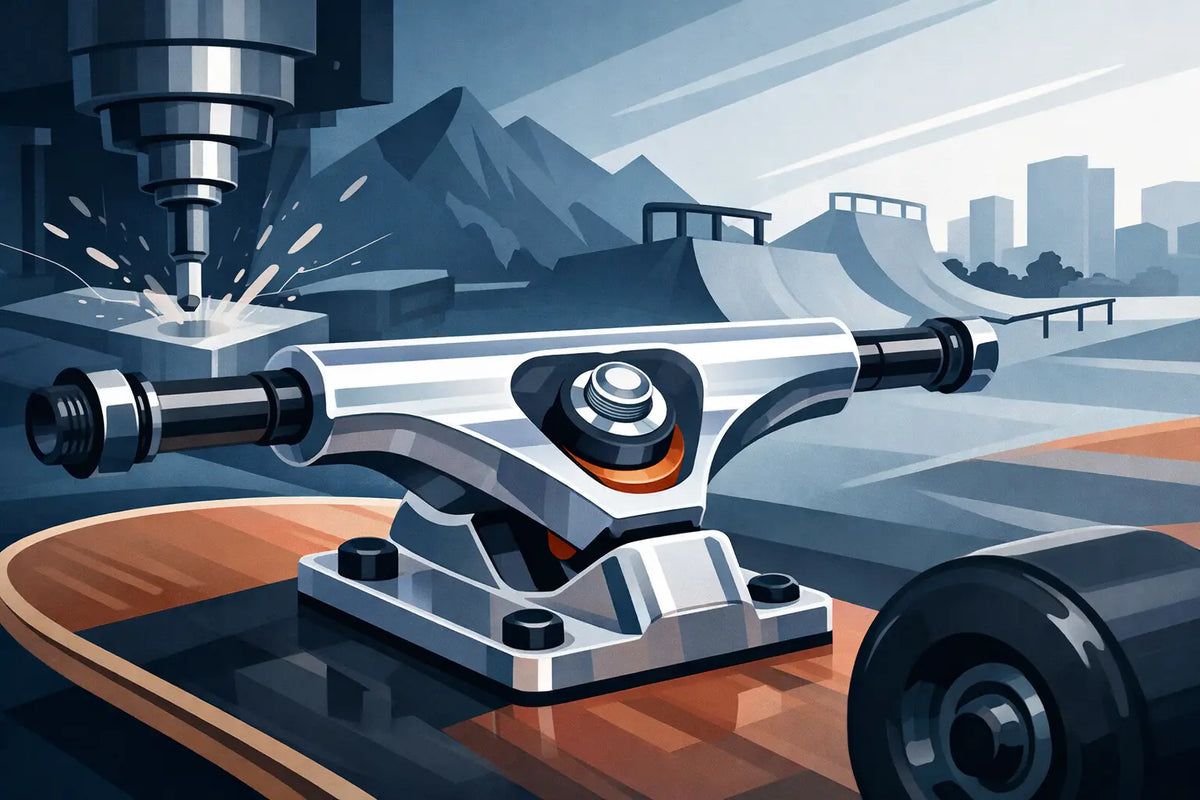
A truck can look like a simple piece of metal until you lean into a fast carve, hit rough pavement, or put serious torque through an electric skateboard. That is where CNC skateboard trucks earn their place. They are not a cosmetic upgrade. Properly designed and machined trucks create a more direct connection between rider, deck, wheels, and road.
For performance riders, the difference shows up in the details: cleaner turning response, fewer unwanted flex points, more consistent geometry, and the confidence to ride harder without wondering whether your hardware is the weak link. But CNC alone does not automatically make a truck better. The design, material, machining quality, geometry, and setup all matter.
What CNC Skateboard Trucks Actually Change
CNC machining starts with a solid billet of metal, typically aluminum alloy, and removes material to produce the final truck components. This is different from cast trucks, which are formed by pouring molten metal into a mold.
A well-executed CNC truck can hold tighter manufacturing tolerances. That matters because truck geometry is not theoretical. Small inconsistencies in pivot seats, hanger alignment, axle placement, or kingpin angles can change how a board turns and how it behaves under load.
On a precision-machined setup, the hanger should sit cleanly in the baseplate, the pivot should move smoothly without excess play, and both trucks should deliver a consistent feel. The result is a ride that feels planted at speed but still responds when you put pressure into a carve.
CNC machining also allows engineers to shape the truck with more intention. Material can remain where strength is needed around the axle, kingpin, and stress-bearing areas, while unnecessary material is removed elsewhere. The goal is not simply to make the lightest truck. It is to create the right balance of stiffness, durability, weight, and control.
Why Precision Matters on Electric Skateboards
Traditional skateboards place relatively modest forces on trucks compared with high-performance electric boards. Electric skateboarding adds speed, heavier decks, larger wheels, braking forces, and drivetrain torque. A truck that feels acceptable at casual cruising speed may feel vague or unstable when the board is moving fast.
CNC skateboard trucks are especially valuable when a setup needs to manage these forces without becoming numb. Their rigidity can help keep wheel alignment and turning behavior predictable when acceleration and braking load the board. For riders using street wheels, all-terrain wheels, or pneumatic tires, that consistency becomes even more important as wheel size and leverage increase.
A stiffer truck does not mean a harsher ride. Bushings, tire pressure, deck flex, wheel compound, and truck geometry still shape comfort. What stiffness can do is prevent the truck itself from introducing imprecise movement. You get more of the response you actually tuned into the setup.
That is why riders who prioritize high-speed commuting, long carves, or aggressive all-terrain riding often look beyond basic cast hardware. When the board has the power to cover ground quickly, the steering system needs to be equally serious.
CNC Machining vs. Cast Trucks
Cast trucks remain common for good reasons. They are cost-effective, widely available, and perfectly capable for many standard skateboard applications. A high-quality cast truck can deliver a great ride for relaxed cruising and lower-speed setups.
The trade-off is consistency and design freedom. Casting can introduce variation and may require thicker sections to achieve the required strength. CNC machining gives manufacturers more direct control over critical dimensions and enables more complex shaping around high-load areas.
For an e-skateboard rider, the decision usually comes down to intended use. If your board is a casual, low-speed cruiser, premium CNC hardware may not be the first upgrade to make. Better wheels, bushings, bearings, or protective gear may have a more immediate effect.
If you ride fast, carry a heavier board, run large wheels, or demand maximum confidence during hard braking and carving, CNC trucks make much more sense. They are a long-term performance component, not a throwaway accessory.
The Geometry That Defines Your Ride
Machining quality matters, but truck geometry determines much of the actual ride character. Before choosing a set of trucks, consider the angles, width, and compatibility with your deck and drivetrain.
Baseplate Angle
A higher baseplate angle generally produces more steering for a given amount of rider input. It can feel lively and carve-focused, especially at lower and moderate speeds. A lower angle reduces turning sensitivity and can provide a more stable, composed feel at speed.
Neither is universally better. A carving-focused urban rider may prefer a more responsive front end, while a rider covering long distances at higher speeds may favor a lower-angle rear truck or a split-angle arrangement. The right setup depends on your terrain, speed, stance, and how much steering input you want from the board.
Hanger Width and Wheel Clearance
Truck width affects leverage, stability, and how the wheels sit relative to the deck. A wider stance can feel stable and controlled, particularly with larger wheels. However, a truck that is too wide for the deck can make a board feel less natural to steer and may expose wheels to more impact.
Wheel clearance also deserves attention. Larger wheels and deep carves increase the risk of wheelbite. Riser pads, appropriately firm bushings, and thoughtful truck geometry can help, but every component must work together. Do not assume that a premium truck eliminates the need to set up the board correctly.
Kingpin and Bushing Configuration
The kingpin and bushings control the resistance you feel as the truck turns. CNC components can provide a precise platform, but the bushings determine much of the tuning range. Rider weight, riding style, and speed should all influence bushing durometer and shape.
Softer bushings allow easier steering but can feel unstable under aggressive riding. Harder bushings add support and confidence at speed but may make a board reluctant to carve. Many serious riders tune the front and rear differently rather than treating both ends of the board the same.
What to Look for Before You Upgrade
A CNC label is only the starting point. Check whether the trucks are built from a suitable aluminum alloy and whether the design reinforces high-stress points instead of merely adding aggressive-looking cutouts. Inspect the pivot cup fit, kingpin hardware, axle design, finish quality, and compatibility with your deck, wheels, and motors.
For electric skateboards, drivetrain compatibility is non-negotiable. A truck may be exceptionally machined yet still be the wrong choice if it does not support your motor mount system, belt clearance, wheel pulley arrangement, or intended tire size. Riders building or upgrading performance boards should think of trucks as part of the complete chassis, not as isolated components.
Serviceability matters too. Bushings, pivot cups, hardware, and replacement hangers should be practical to maintain. Premium equipment should support years of riding, not force a full replacement after one damaged part or worn bushing.
ONSRA approaches performance hardware with that ownership reality in mind: riders need components that can handle demanding use and remain supported when it is time to maintain, tune, or rebuild a setup.
Setup Makes the Difference
Even the best CNC skateboard trucks can feel wrong if they are installed and tuned poorly. Start with properly seated bushings and washers, tightened kingpins, secure mounting hardware, and wheels that spin freely without rubbing. Check for wheelbite at a standstill by leaning the deck through its expected turning range, then test gradually at low speed.
Avoid overtightening the kingpin just to make a board stable. Excessive preload can crush bushings, limit natural rebound, and create a dead steering feel. Start with bushings appropriate for your weight and riding speed, then make small adjustments. A controlled setup is built through tuning, not brute force.
After the first few rides, inspect all truck and axle hardware. New components can settle, especially after heat cycles, vibration, and repeated carving loads. Regular checks are part of responsible high-performance ownership.
The right CNC truck setup should disappear beneath your feet in the best way possible. You should not be thinking about flex, wandering, vague steering, or whether the hardware will hold up. You should be focused on the line ahead, the next carve, and the confidence to ride it properly.
Electric Skateboard vs Electric Scooter: Which Fits?
Protective Gear Sizing Guide for Confident Rides