
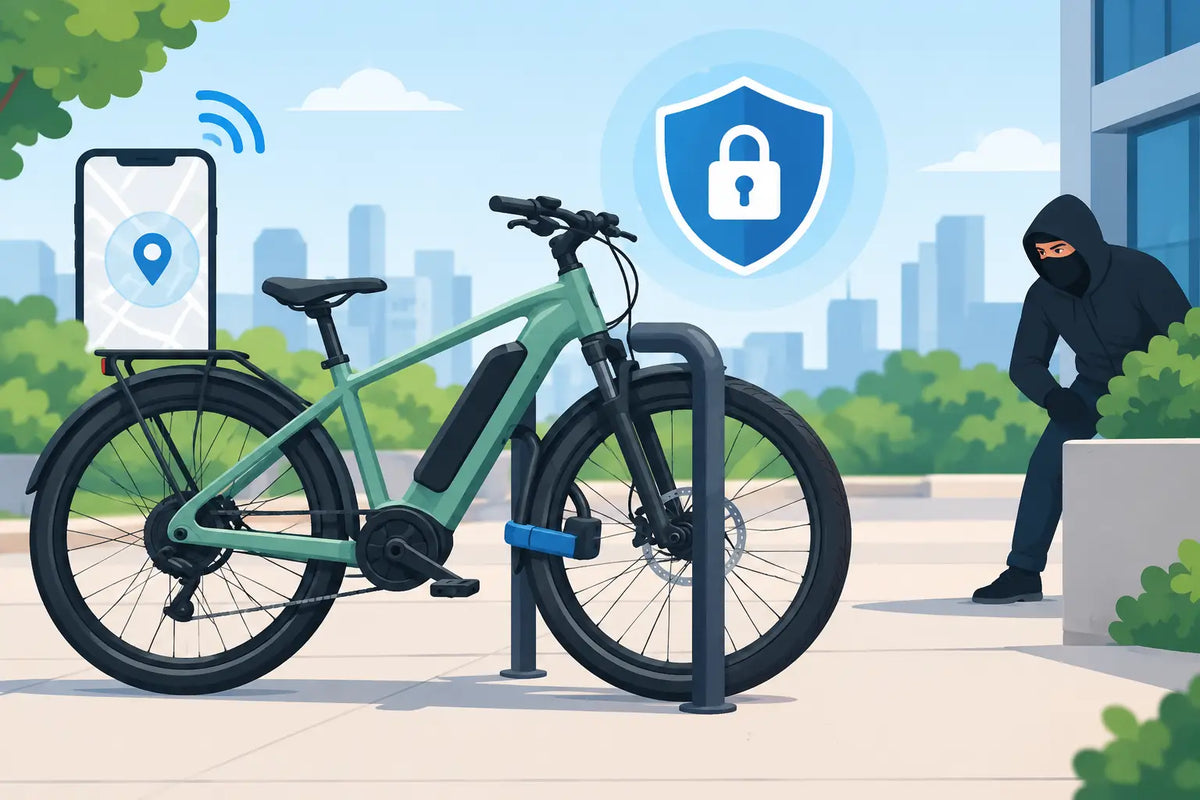
A premium e-bike is built to cover serious miles, not to disappear from a bike rack between errands. Effective ebike theft prevention is not one lock or one app. It is a layered system that makes your bike harder to take, harder to move, harder to resell, and easier to recover if someone still makes an attempt.
The goal is not to make theft impossible. A determined thief with enough time, privacy, and the right cutting tools can defeat almost any setup. Your job is to remove those advantages. Force them to make noise, spend time, take risks, and choose another target.
Ebike Theft Prevention Starts With Where You Park
Your parking choice is the first security decision of every ride. A high-quality lock cannot compensate for a poor anchor point in an isolated location.
Look for a fixed, metal structure that is anchored to the ground and cannot be lifted, unbolted, or cut quickly. A proper bike rack is usually the best option. Avoid thin signposts, chain-link fencing, loose railings, wooden posts, and racks that only secure a front wheel. Before locking up, check that the bike cannot be lifted over the top of the rack and that the rack itself is not damaged.
Visibility matters, but busy does not always mean safe. A rack beside a building entrance, security camera, or active storefront gives a thief less cover than one at the edge of a crowded transit station. At night, choose a well-lit location with regular foot traffic. If your destination offers indoor bike parking, use it. For an expensive e-bike, indoor storage is always the stronger move.
At home, never treat a garage, apartment hallway, or backyard as automatic protection. Garages are common theft targets because riders often leave bikes unlocked or secured only to each other. Lock your e-bike to a ground anchor, wall anchor, or substantial structural point even when it is inside. If possible, keep it out of direct sight when the garage door opens.
Choose a Lock for the Actual Threat
The lock should match both the value of the bike and the time it will be unattended. Lightweight cable locks are useful for accessories or short secondary restraint, but they are not primary protection for a premium e-bike. They can be cut rapidly with basic hand tools.
For most urban riders, a hardened U-lock or heavy-duty chain lock is the baseline. Look for a thick, hardened steel shackle or chain and a lock body designed to resist leverage attacks, picking, and cutting. The strongest lock is not always the biggest one. A lock with minimal internal space gives thieves less room to insert tools and attack it with leverage.
A two-lock setup is often worth the extra weight. Use one primary lock to secure the frame to the rack, then use a second lock to secure the other wheel or frame section. Different lock types are even better because they require different tools and attack methods. A thief prepared for a U-lock may not want to spend extra time working through a hardened chain.
When locking, prioritize the frame. The frame is the highest-value and least replaceable part of the bike. Run the primary lock through the main frame triangle and around the fixed anchor. If the design of the bike or rack makes that impossible, secure the lock around the frame and rear wheel, then use the second lock for the front wheel.
Keep locks off the ground when possible. A lock resting on pavement can give an attacker a stable surface for hammering or cutting. Position the keyway downward or inward to make picking and drilling less convenient, while still leaving yourself room to unlock it without fighting the rack.
Remove What a Thief Can Remove
E-bikes have more removable, high-value components than conventional bikes. The battery is the obvious target, but displays, lights, saddles, bags, action cameras, and quick-release wheels can also turn a secure frame into an expensive loss.
Take the battery with you whenever practical. Beyond reducing theft risk, it avoids exposing a lithium-ion battery to extreme heat, cold, and rain. If removing it is not realistic during a quick stop, make sure it is locked to the frame and that the lock mechanism is fully engaged. Do not leave a key in the battery lock.
Consider replacing quick-release skewers with security skewers or locking axle hardware. They add a small amount of inconvenience during maintenance, but they can stop the easiest wheel thefts. A locking seat clamp is also a smart upgrade if your bike has a premium saddle or a dropper post.
Do not advertise what is in a pannier or storage bag. Take valuables with you, and remove accessories that detach in seconds. A bike that looks prepared for a long ride is appealing. A bike that also looks difficult to part out is less appealing.
Use Tracking, Alarms, and Identification as Backup
Electronic security does not replace a lock, but it can improve your odds after a theft. A concealed GPS tracker can provide location updates, while a Bluetooth tracker may help locate a bike in nearby areas. The trade-off is simple: Bluetooth trackers are affordable and compact but have limited independent tracking capability. GPS systems can provide stronger coverage but may require charging or a subscription.
Install any tracker where it cannot be spotted and removed in seconds. A visible tracker is a deterrent only until a thief knows where to look. Keep its battery maintained, test alerts regularly, and make sure the app is connected to the contact information you actually use.
A motion alarm can also be useful for short stops. Its main value is disruption. A loud alarm brings attention to the bike and may push an opportunistic thief away before they can start cutting. It will not stop someone working in an empty location, so treat it as another layer rather than the center of your security plan.
Document the bike before anything happens. Record the serial number, frame details, battery serial number, purchase receipt, and clear photos from both sides. Photograph unique components, scratches, decals, and upgrades. Register the serial number where local law enforcement or bike-registration services support it. ONSRA riders who invest in performance components should record those parts too, since detailed documentation helps establish ownership and identify a recovered bike.
Build a Routine You Will Actually Follow
The best security setup is the one you use every time. If carrying two heavy locks feels excessive for a short coffee stop, create a realistic split between low-risk and high-risk parking. For example, a brief stop outside a visible storefront may call for a U-lock and battery removal. A longer stop near a transit hub, campus, or nightlife district should justify two locks, battery removal, and a better parking location.
Avoid predictable routines when you can. Parking in the same isolated place for hours every day gives thieves time to observe your equipment and habits. Rotate among secure racks, vary your arrival time, and check the rack before leaving the bike. A compromised rack or a damaged lock left nearby can be a warning sign.
Before walking away, do a 10-second security check. Confirm the frame is inside the lock, the lock is around a fixed anchor, the battery is removed or secured, and no quick-release accessory is left exposed. Then tug the bike and lock once. That small habit catches more mistakes than any expensive accessory.
If Your E-Bike Is Stolen
Act quickly, but do not try to recover a bike alone from a private residence or confront a suspected thief. Save tracker screenshots, note the time and exact location, and contact local law enforcement. Provide the serial number, photos, purchase documentation, and distinguishing features. If the bike appears on a resale marketplace, preserve the listing details and report them through the appropriate channel rather than arranging a risky meetup.
Notify your insurer if the bike is covered through a dedicated policy, renters insurance, homeowners insurance, or a specialty e-bike plan. Coverage varies widely, especially for theft away from home and high-value performance bikes, so review the policy before you need it.
A serious e-bike deserves security that is as intentional as its drivetrain, battery, and brakes. Buy the lock you would want to defeat, park like someone is watching, and make battery removal and proper frame locking part of every stop. The extra minute is a small price to keep your next ride on your terms.
How to Set Tire Pressure for Better Rides
How to Tighten Ebike Brakes Without Guesswork