
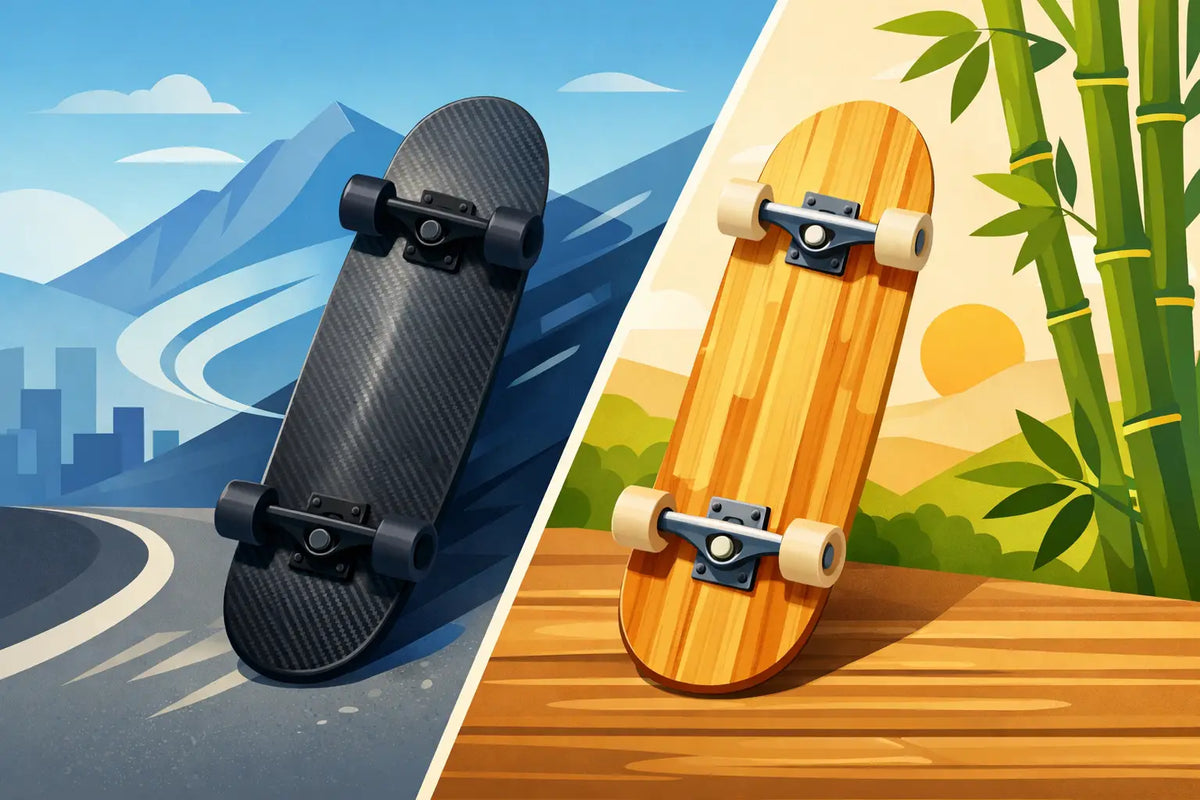
A deck decision becomes obvious the moment the pavement gets rough, the speed rises, or a hard carve loads up the board. In the carbon deck vs bamboo deck debate, neither material is automatically better. One favors a planted, precise platform; the other brings a more natural, forgiving ride. The right answer depends on how, where, and how aggressively you ride.
For electric skateboards, the deck is more than a place to stand. It influences steering response, how vibration reaches your feet, battery and enclosure integration, ground clearance, and confidence at speed. Riders choosing between carbon and bamboo should look past appearance and focus on the complete board setup.
Carbon Deck vs Bamboo Deck: The Core Difference
A carbon deck is typically built from carbon fiber composite layers, often with a shaped core and integrated mounting points. Its defining trait is stiffness relative to its weight. Carbon fiber can be engineered into a highly rigid platform that holds its shape under acceleration, braking, and aggressive cornering.
A bamboo deck uses laminated bamboo veneers, usually combined with fiberglass and sometimes other composite layers. Bamboo has more natural flex than carbon fiber. That flex lets the deck absorb part of the impact from broken asphalt, expansion joints, and coarse pavement before it reaches the rider.
This creates two distinctly different ride characters. Carbon feels direct, controlled, and connected to the road. Bamboo feels lively, compliant, and easier on the body over longer stretches of imperfect pavement.
Carbon delivers precision under load
The biggest advantage of carbon is composure. When a rider shifts weight into a fast carve or brakes hard before a corner, a stiff carbon platform resists bending and twisting. The board responds more immediately because less of the rider's input is being absorbed by deck flex.
That matters most for heavier riders, high-power drivetrain setups, and speed-focused riding. A stable platform helps the rider stay centered while the board puts down torque. It also makes high-speed carving feel more predictable, especially when paired with properly tuned trucks and performance tires.
Carbon construction can also support clean, purpose-built packaging. Batteries, electronics, cable routing, and mounting hardware may be integrated into a shaped deck or enclosure system, reducing exposed components and giving the board a more refined, durable profile. The exact design matters, but composite construction gives engineers plenty of freedom to build a rigid, protected chassis.
Bamboo gives you usable comfort
Bamboo is not soft or weak when used in a quality electric skateboard deck. Layered bamboo and fiberglass construction can be exceptionally durable. Its advantage is controlled flex, which works like a small amount of suspension beneath the rider.
On commuting routes and longer recreational rides, this can reduce foot fatigue. Instead of every sharp impact traveling directly from the wheels through the deck, the board bends slightly and smooths the hit. Riders coming from traditional longboarding often prefer this familiar, surf-inspired movement.
The trade-off is that flex changes under load. A lighter rider may find a bamboo deck responsive and smooth, while a heavier rider can make the same deck feel noticeably softer. During hard acceleration or forceful carves, some riders enjoy that springy feel; others want the instant support of a stiff platform.
Ride Feel: Stability Versus Flex
If your priority is maximum stability, carbon usually has the edge. Its stiffness gives the rider a consistent base, particularly when traveling quickly or riding with a performance mindset. The board feels more locked in, which can inspire confidence on wide roads, long sweepers, and terrain where your inputs need to be exact.
If your priority is comfort over rough pavement, bamboo has a strong case. Flex does not replace suspension, pneumatic tires, or proper tire pressure, but it helps take the edge off everyday road vibration. For riders covering miles of bike paths, city streets, and patched pavement, that reduced harshness can make a meaningful difference.
There is a point where too much flex becomes a compromise. At speed, a very flexible deck can feel less settled because the rider's stance changes as the board bends. This is not necessarily dangerous on its own, but it demands more attention and may not suit riders who prefer a firm, race-inspired platform.
Deck shape matters as much as material. Concave, foot pockets, drop decks, and standing-platform width all influence control. A well-designed bamboo deck can feel highly secure, while a poorly engineered carbon deck can still be uncomfortable or awkward. Material sets the foundation; geometry and build quality finish the job.
Weather Resistance and Long-Term Ownership
Carbon composite generally handles moisture exposure better than a conventional wood-based deck. It does not absorb water in the same way bamboo does, making it a practical choice for riders dealing with wet roads, puddle splash, and changing conditions. That does not make an electric skateboard waterproof. Motors, bearings, battery systems, connectors, and enclosures still need protection and regular inspection.
Bamboo requires more attention around damaged finishes, drilled holes, and exposed edges. A quality deck is sealed and built for outdoor use, but repeated water exposure can eventually affect wood laminates if moisture reaches vulnerable areas. Riders should dry the board after wet conditions and inspect the deck for chips, cracks, delamination, or soft spots.
Neither material should be selected solely on weather resistance. A carbon deck with a poorly sealed enclosure is not a wet-weather solution, and a well-maintained bamboo composite deck can provide years of reliable service. The bigger ownership question is whether you want the rigid, low-maintenance character of composite construction or the comfort and feel of a flex deck.
Consider Your Weight, Terrain, and Riding Style
A carbon deck is often the better match if you are a larger rider, ride at higher speeds, or regularly push hard through turns. More rider weight places more load on the platform. A stiff deck maintains predictable geometry and avoids the deep flex that can make aggressive riding feel vague.
Bamboo is a compelling choice for riders who value carving, pavement comfort, and a more relaxed longboard feel. It is especially appealing for moderate-speed cruising, daily commuting, and routes with rough surfaces where a rigid deck can feel punishing.
Terrain changes the equation. Smooth bike paths and freshly paved streets let riders enjoy either platform. Cracked city pavement makes bamboo flex more noticeable, while high-speed open roads reveal why many performance riders prefer carbon's stable response. Off-road and all-terrain riding adds another variable: large pneumatic tires provide far more impact control than deck flex alone, so the deck choice becomes more about stance, precision, and packaging.
The Rest of the Setup Can Change the Answer
Do not choose a deck in isolation. Tire size, wheel compound, truck geometry, bushings, battery placement, and drivetrain power all shape the final ride. A carbon deck paired with pneumatic tires can be remarkably comfortable while retaining strong high-speed control. A bamboo deck with street wheels can still transmit plenty of vibration, despite its natural flex.
Truck setup deserves special attention. Loose trucks and a flexible bamboo deck create a deep, surfy carve, but may feel nervous at speed. Tighter trucks, supportive bushings, and a stiff carbon platform produce a more deliberate, confidence-building response. Neither approach is wrong. They are built for different riders and different roads.
For a premium electric skateboard, look for the whole engineering package: deck construction, component protection, serviceability, hardware quality, and access to replacement parts. A board that feels great on day one should also be practical to maintain after months of real riding.
Choose the Deck That Matches Your Real Rides
Choose carbon when you want a firm, precise platform for speed, high-power riding, heavier loads, and a clean integrated build. It is the choice for riders who want their board to feel composed when they lean into it.
Choose bamboo when comfort, carving flow, and road feel matter more than maximum stiffness. It brings personality to the ride and can make rough pavement far less tiring over distance.
Before committing, picture the roads you actually ride rather than the roads in a product photo. If your usual route is fast, open, and demanding, a carbon platform will likely reward you every session. If it is uneven, urban, and built around long cruises, bamboo may keep you riding longer with a bigger grin. The best deck is the one that makes you want to take the long way home.
Electric Bike Sizing Guide for Better Control
Fast Charging Electric Skateboard Buying Guide