


ONSRA photo shoot in the USA, not in Singapore. Photos show riding locations abroad and are not a statement that riding there, or in Singapore, is legal.
We get a lot of orders and messages from Singapore, and almost all of them end with the same question: "Can I actually ride this here?" It is a fair question, and the honest answer is more specific in Singapore than almost anywhere else we ship to. Singapore does not leave e-boards in a grey zone. It has a dedicated law, clear device limits and a published map of where each device type may go.
So this guide does one thing: it walks through the current rules, using only official sources (the Land Transport Authority, the Active Mobility Act 2017 on Singapore Statutes Online, the Road Traffic Act and the Active Mobility Advisory Panel), and tells you exactly which parts apply to an electric skateboard. Then it does something most brand blogs avoid: it checks our own boards against those rules. Spoiler: as listed today, they do not meet them. We would rather you hear that from us before you order than from an enforcement officer after.
Short answer (October 2026): in Singapore an electric skateboard is a motorised personal mobility device (PMD). Motorised PMDs are banned from footpaths, pedestrian-only paths and roads. They may only use cycling paths and shared paths, and only if the device weighs no more than 20 kg, is no wider than 70 cm, has a maximum device speed of 25 km/h and is certified to UL2272. Every ONSRA board lists a top speed well above 25 km/h and none is advertised as UL2272-certified, so no current ONSRA board may be ridden on any public path or road in Singapore. Importing one also needs LTA approval, which LTA says it generally grants only for compliant devices.
Is an electric skateboard a PMD in Singapore?
Yes, and this is not open to interpretation. Section 2 of the Active Mobility Act 2017 defines a "personal mobility device" as a wheeled vehicle built to transport people that is propelled by an electric motor, by human power or both, and the definition says in so many words that it "includes a skateboard". A "motorised PMD" is any PMD that is not designed to be propelled by human power only. An electric skateboard has a motor, so it is a motorised PMD.
LTA uses the same classification. Its Import Control Regime page lists electric skateboards, alongside electric unicycles, hoverboards and e-scooters without handlebars, as motorised PMDs that are not registrable under the Act. That last detail matters later, because it means several e-scooter rules (registration, the theory test) are not written for e-boards, while the device criteria and the path rules are.
The device criteria: 20 kg, 70 cm, 25 km/h, UL2272
LTA's Rules & Code of Conduct page sets four requirements for motorised PMDs and e-scooters before they can be used on public paths. They trace back to the Active Mobility Advisory Panel, whose 2016 report recommended the weight, width and speed limits that later went into law.
| Criterion | Limit for motorised PMDs | Why it exists |
|---|---|---|
| Unladen weight | 20 kg maximum | A lighter device does less damage in a collision on a shared path. |
| Width | 70 cm maximum | Paths are shared; wide devices block other users. |
| Maximum motorised device speed | 25 km/h | The device itself must not be capable of more, not just ridden slower. |
| Fire safety | Certified to UL2272 and on LTA's whitelist | Battery fires were the main driver of the 2019–2021 crackdown. |
Two points are easy to miss. First, the speed rule is about what the device can do, not how fast you choose to ride it. A board that can reach 40 km/h is not compliant just because you promise to stay at 20. Second, UL2272 is a certification of the whole device (battery, charger and electrical system), so a board does not become compliant by adding a certified charger or by having good cells inside.
Where an electric skateboard may (and may not) go
LTA's chart Where active mobility devices are allowed (correct as of 9 March 2026) gives the full picture for motorised PMDs:
| Path type | How to recognise it | Speed limit | Motorised PMD (e.g. e-skateboard) |
|---|---|---|---|
| Footpath | Unmarked paths beside roads and within HDB estates | 10 km/h | Not allowed |
| Pedestrian-only path | Next to a cycling path, marked for pedestrians | – | Not allowed |
| Cycling path | Typically red or dark grey, "Cyclist" logo | 25 km/h | Allowed only if the device is compliant |
| Shared path | Marked with "Cyclist" and "Pedestrian" logos | 25 km/h | Allowed only if the device is compliant |
| Road | Excludes expressways and road tunnels | Road limit | Not allowed |
The footpath ban for e-scooters started on 5 November 2019 and LTA extended it to other motorised PMDs. Since 1 July 2025, LTA has also been converting footpaths that run next to dedicated cycling paths into Pedestrian-Only Paths, where even bicycles and non-motorised PMDs are not allowed. On roads, the LTA e-scooter page confirms that "the current policy of disallowing personal mobility devices (PMDs), including e-scooters, on roads remains". "Road" here has the meaning given in the Road Traffic Act 1961, and it covers far more than expressways.
In practice this means the island-wide Park Connector Network and cycling paths are the only public places where any e-skateboard could legally roll, and only a fully compliant one. LTA also notes that riding can be banned on specific paths even for compliant devices, so watch the signs.

ONSRA photo shoot in the USA, not in Singapore. Photos show riding locations abroad and are not a statement that riding there, or in Singapore, is legal.
How ONSRA boards compare with the Singapore criteria
Here is the check we promised, using only figures from our own product pages on onsra.com (October 2026). Where a page does not give a number, we say so instead of guessing.
| Board | Weight (≤ 20 kg) | Deck size (≤ 70 cm wide) | Top speed (≤ 25 km/h) | UL2272 | Compliant? |
|---|---|---|---|---|---|
| ZENO | not listed | not listed | not listed | not stated | No (no UL2272 listing; not sold as a 25 km/h device) |
| Challenger 2.0 Street | 9.9 kg | 90 × 27 cm | 48 km/h (up to 62 km/h) | not stated | No (speed above 25 km/h; no UL2272 listing) |
| Challenger 2.0 All Terrain | 10.1 kg | 90 × 27 cm | 45 km/h (up to 49 km/h) | not stated | No (speed above 25 km/h; no UL2272 listing) |
| BLACK Carve 4 Street | not listed | not listed | not listed | not stated | No (no UL2272 listing; not sold as a 25 km/h device) |
| BLACK Carve 4 AT | not listed | not listed | not listed | not stated | No (no UL2272 listing; not sold as a 25 km/h device) |
| VELAR 2.0 Gear Drive | 18.4 kg | 92.3 × 28.3 cm (trucks 43 cm) | 65 km/h | not stated | No (speed above 25 km/h; no UL2272 listing) |
| VELAR 2.0 S | 18.4 kg | 92.3 × 28.3 cm (trucks 43 cm) | 62 km/h (up to 70 km/h) | not stated | No (speed above 25 km/h; no UL2272 listing) |
The good news is that weight and width are not the problem. The Challenger 2.0 boards weigh about 10 kg and even the VELAR 2.0 comes in at 18.4 kg, under the 20 kg cap; all decks are far narrower than 70 cm. The problem is speed and certification. Our boards are built as performance boards, with listed top speeds from 45 to 65 km/h, and none of our product pages claims UL2272 certification or a place on LTA's whitelist. The BLACK Carve 4 and ZENO pages list no top speed, but they are powered (14S) performance boards, not 25 km/h devices, and they are not listed as UL2272-certified either.
We are not going to dress that up. If you live in Singapore, an ONSRA board is not a legal way to commute on public paths, and we will not sell it to you as one.


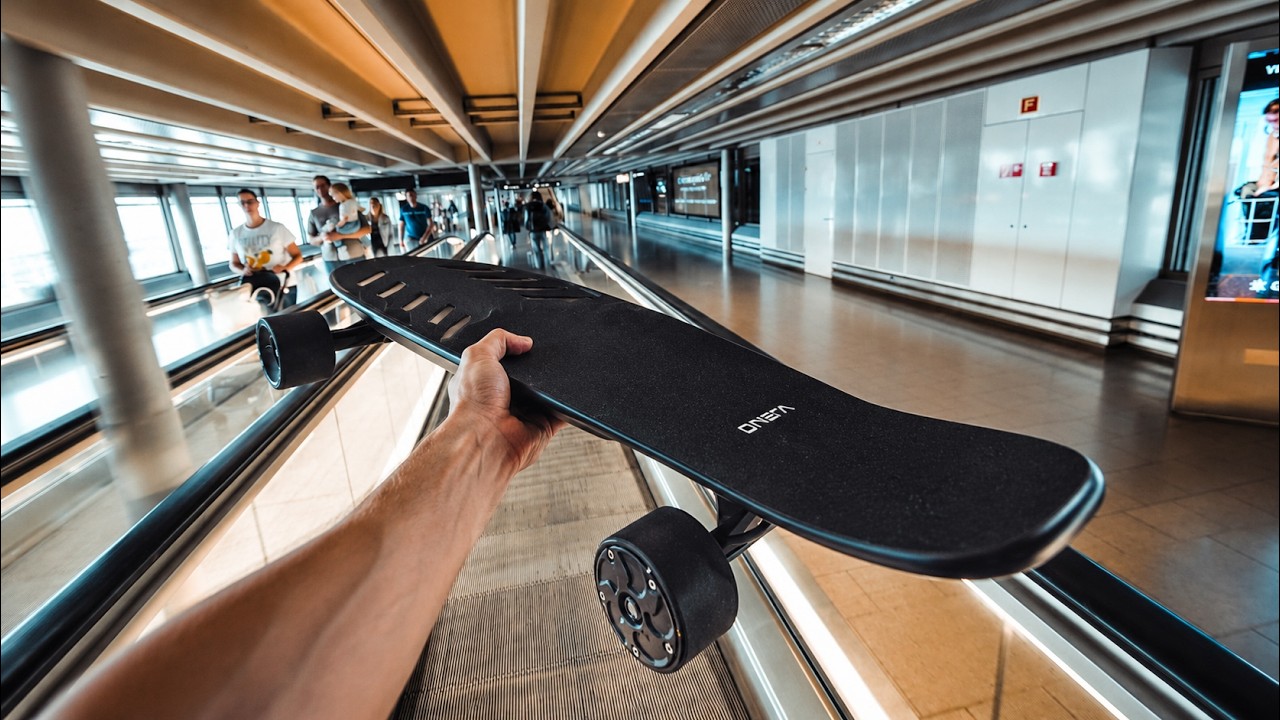
ONSRA product photos from onsra.com.
Registration, theory test and age rules
Much of what you read online about Singapore PMD rules is really about e-scooters. Here is how those rules relate to e-skateboards:
- Registration: applies to e-scooters (motorised PMDs with handlebars). New e-scooters must pass a registration inspection, carry an LTA Registration Mark and go for periodic inspection every two years (LTA). LTA classifies electric skateboards as not registrable, so there is no registration route that would make a non-compliant e-board legal.
- Online theory test: LTA requires e-scooter and power-assisted bicycle riders to pass a mandatory theory test before riding on cycling paths. LTA does not publish a theory test for e-skateboards.
- Age: LTA's published rule says individuals under 16 must not ride an e-scooter on cycling paths unless supervised by an adult aged at least 21, and under-16s may not ride PABs on cycling paths or roads at all. The Active Mobility Act also allows a minimum riding age to be prescribed for motorised PMDs on shared paths. Since a non-compliant e-board may not be ridden on public paths at any age, the age rule changes nothing for ONSRA boards.
- Keeping a device at home: from 1 June 2026 it is an offence to keep a non-UL2272 e-scooter. LTA words this rule for e-scooters specifically. It does not mention e-skateboards, but see the fire safety section below before you treat that as a green light.
Fines and penalties (from LTA)
These are the maximum penalties LTA publishes for first-time offenders. We list only figures that appear in LTA material; repeat offenders face higher maximums.
| Offence | Maximum penalty (first offence) | Source |
|---|---|---|
| Riding a non-compliant active mobility device on a public path | Fine up to S$10,000, jail up to 6 months, or both | LTA warning notice |
| Riding a non-UL2272 motorised PMD on public paths | Fine up to S$10,000 and/or jail up to 6 months | LTA Rules page |
| Riding a motorised PMD on a footpath | Fine up to S$2,000, jail up to 3 months, or both | LTA warning notice |
| Riding a PMD on a road | Fine up to S$2,000, jail up to 3 months, or both | LTA warning notice |
| Riding a PMD on a pedestrian-only path | Fine up to S$2,000, jail up to 3 months, or both | LTA warning notice |
| Importing a motorised PMD without LTA approval (individual) | Fine up to S$5,000, jail up to 6 months, or both | LTA import page |
| Fire safety violation, e.g. device in an HDB common corridor | Fine up to S$5,000 on conviction (Town Council by-laws) | LTA media reply, Feb 2023 |
Enforcement is real: LTA said around 1,000 non-compliant active mobility devices were seized in 2022 alone, and repeat offenders for using non-compliant devices can face up to S$20,000 and 12 months (LTA).
Importing an electric skateboard into Singapore
This is the part many buyers miss. Since June 2021, under the Small Motorised Vehicles (Safety) Act 2020, anyone bringing a motorised PMD into Singapore needs LTA approval first (HS code 87116092, which LTA says covers electric skateboards). The permit is applied for through TradeNet, and the rule also covers individuals: residents coming home and travellers entering Singapore with a device for personal use (LTA Import Control Regime).
LTA states that it will "in general" only grant import approval for compliant motorised PMDs. For non-compliant devices it may approve imports only in specific cases after strict assessment, such as research, re-export, commercial or government use exclusively on private land or land with restricted public access, or military use. Travellers who arrive without a permit may be told to send the device back to the port of origin, dispose of it on the spot for a fee, or have it seized and face penalties.
What this means for an ONSRA order: our store does list Singapore as a shipping destination, but a board arriving without LTA import approval can be stopped at the border, and you as the importer carry the risk. Please email us before you order so we can talk it through, and do not book a flight to Changi with a board in your luggage expecting to wave it through.

ONSRA photo shoot in the USA, not in Singapore. Photos show riding locations abroad and are not a statement that riding there, or in Singapore, is legal.
Fire safety at home: HDB flats and condos
Fire risk is the reason Singapore's rules got so strict. LTA reported 63 active-mobility-device fires in 2021 and 42 in 2022, with 12 fires in HDB common areas in 2022. It reminds owners that parking devices in corridors and escape staircases obstructs escape routes, and Town Councils can issue notices, remove or detain devices, with fines up to S$5,000 on conviction (LTA).
Whatever board you own, wherever you ride it, these habits are worth keeping:
- Store and charge the board inside your unit, never in a corridor, staircase or lift lobby.
- Use only the original charger that came with the board, and do not leave a charging board unattended or charging overnight next to an exit.
- Let a hot battery cool down before charging; in Singapore's heat that can take a while after a ride or a car boot.
- Stop using a board whose battery enclosure is cracked, swollen, smells or got hot after an impact, and contact us.
- Check your condo's MCST by-laws; many have their own rules on devices in common property.

ONSRA photo shoot in the USA, not in Singapore. Photos show riding locations abroad and are not a statement that riding there, or in Singapore, is legal.
So where can you ride an ONSRA board if you live in Singapore?
Honestly: not on public paths or roads. What remains is narrow but real:
- Private land, with the owner's permission and away from public access. Note that a condo's driveways and walkways may still count as paths the public can use, so check before you ride.
- Trips abroad to places with more permissive rules. Check the rules of the destination, airline battery limits (the ZENO has a 99 Wh flight-safe option) and remember the Singapore import permit when you come back.
- Riders relocating or living part of the year elsewhere, who want to buy before they move. In that case, ship to the destination, not to Singapore.
If you want to ride every day on Singapore's cycling paths and Park Connectors, you need a device that is under 25 km/h, under 20 kg, under 70 cm wide and on LTA's UL2272 whitelist. We would rather tell you that plainly than sell you a board that ends up in a holding yard.

ONSRA photo shoot in the USA, not in Singapore. Photos show riding locations abroad and are not a statement that riding there, or in Singapore, is legal.
ONSRA video on travelling internationally with an electric skateboard. Always check the destination's laws first.
A quick checklist before you buy any e-board in Singapore
- Is the maximum device speed 25 km/h or less, by design?
- Is the device UL2272-certified and on LTA's whitelist (ask for the certificate mark)?
- Does it weigh 20 kg or less unladen, and is it 70 cm wide or less?
- Has the seller or importer obtained LTA import approval?
- Where will you store and charge it, inside your unit?
- Will you ride only on cycling and shared paths, never on footpaths, pedestrian-only paths or roads?
If any answer is "no", the device should not be ridden on public paths in Singapore.

ONSRA photo shoot in the USA, not in Singapore. Photos show riding locations abroad and are not a statement that riding there, or in Singapore, is legal.
FAQ: electric skateboard law in Singapore
Are electric skateboards legal in Singapore?
They are legal to ride on cycling paths and shared paths only if the device is compliant: maximum 20 kg, 70 cm wide, a maximum device speed of 25 km/h and UL2272 certification. Electric skateboards are motorised PMDs, so they are banned from footpaths, pedestrian-only paths and roads.
Is an electric skateboard a PMD under the Active Mobility Act?
Yes. Section 2 of the Active Mobility Act 2017 defines a personal mobility device and explicitly says it includes a skateboard. With an electric motor it is a motorised PMD.
Can I ride an electric skateboard on the road in Singapore?
No. LTA does not allow PMDs on roads. The maximum penalty LTA lists for riding a PMD on a road is a fine of S$2,000, three months in jail, or both.
Can I ride an electric skateboard on the footpath or in my HDB estate?
No. Motorised PMDs have not been allowed on footpaths since LTA extended the e-scooter footpath ban. Footpaths include the unmarked paths within HDB estates.
Do I need to register my electric skateboard or take the theory test?
Registration and the mandatory theory test apply to e-scooters (and the test also to power-assisted bicycles). LTA classifies electric skateboards as not registrable, so there is no registration route to make a non-compliant board legal.
Are ONSRA electric skateboards legal in Singapore?
Not on public paths or roads. Every ONSRA board lists a top speed above 25 km/h or is a performance board not sold as a 25 km/h device, and none is listed as UL2272-certified. Weight (up to 18.4 kg) and width are within the limits.
Can I bring an electric skateboard into Singapore from abroad?
Only with LTA import approval, which also applies to travellers and returning residents. LTA generally grants approval only for compliant devices. Without a permit the device can be sent back, disposed of or seized, and you may face penalties.
What is the fine for riding a non-compliant PMD in Singapore?
LTA lists a maximum of S$10,000, six months in jail, or both for a first offence of riding a non-compliant device on a public path, and up to S$20,000 and 12 months for repeat offenders.
Still deciding? Our Singapore buying guide for 2026 covers every ONSRA board, Singapore's heat and rain, storage in condos and HDB flats, travel and shipping, with the same legal framing.
Sources (official, checked 12 October 2026)
- Active Mobility Act 2017, section 2 (definitions), Singapore Statutes Online
- Road Traffic Act 1961, Singapore Statutes Online
- LTA: Rules & Code of Conduct (device and user requirements)
- LTA: Where active mobility devices are allowed (9 March 2026)
- LTA: Warning notice for retailers, device requirements and penalties (March 2024)
- LTA: Import Control Regime for PABs and motorised PMDs
- LTA OneMotoring: E-Scooters
- LTA media reply: Public should use active mobility devices that meet specifications (Feb 2023)
- Active Mobility Advisory Panel report (March 2016)
This article is general information, not legal advice. Rules change; LTA's pages are the final word. ONSRA specs come from onsra.com product pages (October 2026). Questions: info@onsra.com.

Electric Skateboard Speed Wobble: Why It Happens and How to Stop It
ONSRA BLACK Carve 4 (BC4): Gear Drive, 14S and What’s New vs BLACK Carve 3, 2 and 1