
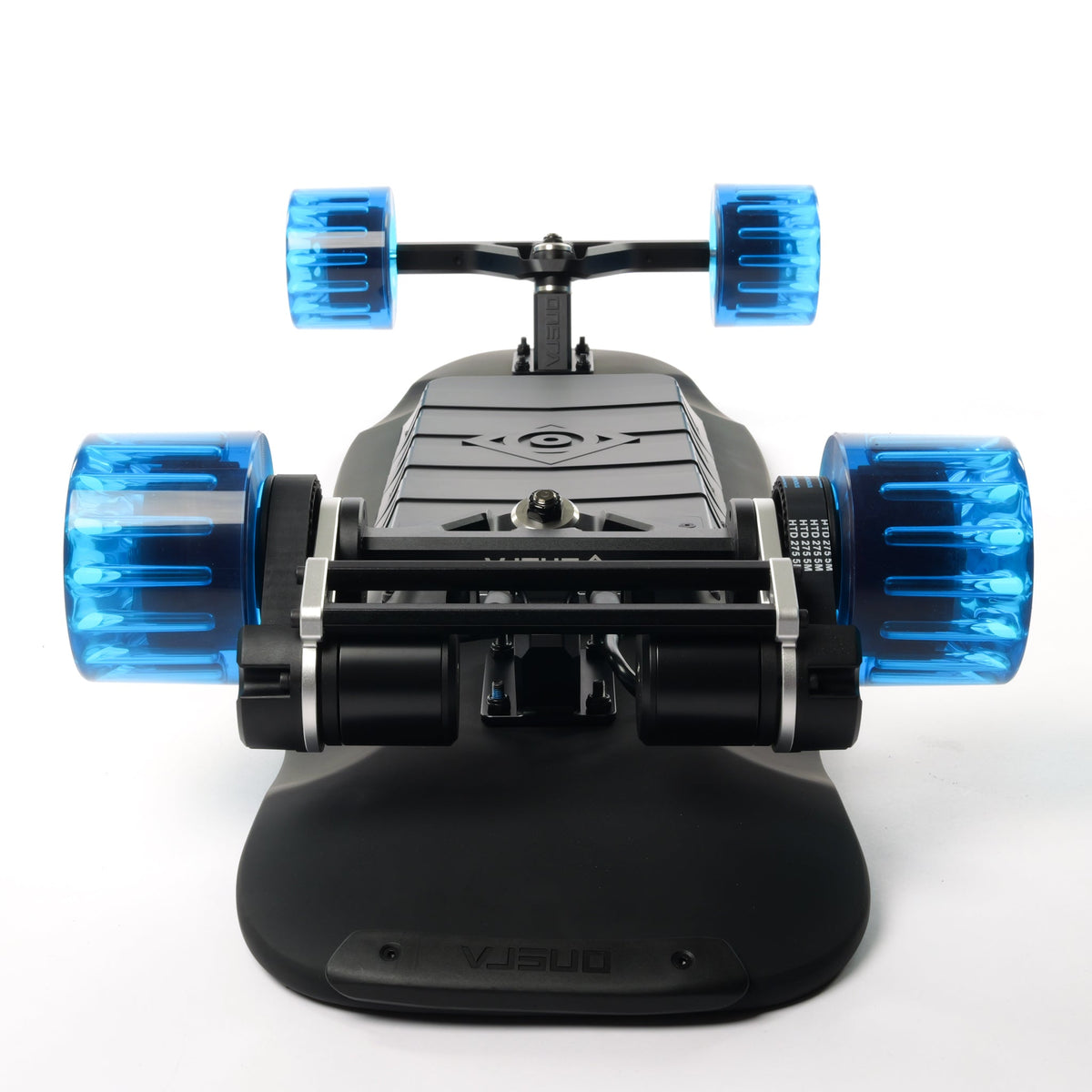
A lot of electric skateboards for sale look impressive for the first five minutes. Big top-speed claims, oversized battery numbers, flashy deck graphics. Then you look closer and the real questions show up fast: how does it carve, how does it hold up, and what happens after a few hundred miles when parts wear out or something needs service?
That is where serious buyers separate marketing from machinery. If you are shopping for a board you plan to ride hard, commute on, or keep for years instead of one season, the right choice is rarely the one with the loudest spec sheet. It is the one with the best balance of performance, build quality, support, and long-term ownership value.

How to judge electric skateboards for sale
Start with the ride, not the headline specs. A board can advertise high speed and long range, but if the trucks feel unstable, the deck has poor flex, or the remote response is inconsistent, the experience falls apart. Real performance is not one number. It is how power delivery, turning geometry, deck shape, wheel setup, and braking feel together under your feet.
For most riders, the first major decision is street versus all-terrain. Street setups usually feel quicker, lighter, and more connected to the pavement. They are ideal for smooth roads, bike lanes, and tighter urban riding. All-terrain boards trade some efficiency and road feel for comfort, traction, and rough-surface capability. If your routes include cracked pavement, gravel sections, or mixed terrain, pneumatic tires can change everything.
Then there is the question of deck style. A lower, drop-down platform tends to feel planted and easier to control at speed. A traditional top-mount can feel more lively and responsive. Some riders want deep carve and surf-style movement. Others want downhill-style stability with clean power on straights. Neither is automatically better. It depends on whether your priority is commuting, carving, distance, or off-road confidence.

The specs that actually matter
Motor power matters, but not in the way many listings suggest. Raw wattage looks good on paper, yet usable torque and tuning matter more. A board should accelerate cleanly from a stop, hold speed on inclines, and brake with control instead of sudden grab. Smooth throttle mapping is a premium feature because it affects every ride.
Battery quality is where long-term value gets real. Cheap battery packs can inflate range claims and still deliver inconsistent voltage under load. A well-built pack does more than extend mileage. It improves reliability, keeps performance more consistent as charge drops, and reduces the chance of premature failure. If you are comparing boards, look beyond the claimed max range and pay attention to cell quality, pack design, and whether the brand treats the battery like a core engineering component or just a sales bullet.
Truck design is another major separator. Precision and stability come from geometry, materials, and machining quality. Riders who care about carving should pay very close attention here. The difference between a generic truck and a refined setup is obvious once you hit speed or start linking turns. Better trucks track more predictably, carve with less slop, and inspire more confidence when road conditions get sketchy.
Wheels and tires also deserve more respect than they usually get. Urethane wheels can feel fast and direct, but diameter, contact patch, and hardness all affect comfort and grip. Pneumatic tires add compliance and open up more terrain, but they increase rolling resistance and maintenance. There is always a trade-off. More comfort often means more weight. More range efficiency often means less shock absorption.

Why cheap boards cost more than they seem
There is a reason premium boards command higher prices. Better materials, tighter tolerances, stronger electronics enclosures, quality bearings, CNC-machined parts, and properly engineered drivetrains cost more to build. That extra investment usually shows up in the exact areas serious riders notice first: ride feel, durability, and consistency.
When lower-priced boards fail, they rarely fail in a convenient way. It might be a charger issue, a remote pairing problem, a battery that drops performance too early, or hardware that loosens faster than it should. Even if the board keeps running, small weaknesses add up. More maintenance, more downtime, less confidence.
The bigger issue is support. Plenty of online listings make a board easy to buy and hard to own. If replacement parts are limited, if shipping takes too long, or if warranty service feels like a battle, the initial savings disappear fast. For a premium electric skateboard, the ownership ecosystem matters almost as much as the board itself.

What premium buyers should look for
If you are spending serious money, demand serious details. Look for a brand that can support the board beyond the checkout page. That means available replacement parts, clear product documentation, responsive service, and a warranty that signals confidence instead of caution.
This is also where a specialist brand has an advantage over a broad marketplace. A focused lineup usually means better product knowledge, more refined tuning, and fewer compromises. The board is not just another SKU in a giant catalog. It is part of a complete system that includes accessories, wear items, upgrades, and service support.
A well-supported platform lets you keep riding instead of starting over. New wheels, fresh tires, remotes, trucks, chargers, hardware, bushings, and protective gear should not feel like an afterthought. They are part of what makes a board a real long-term purchase rather than a short-term gadget.
Electric skateboards for sale by rider type
The right board depends on how you ride.
If you commute in a city, prioritize predictable braking, manageable weight, practical range, and a deck shape that stays comfortable over distance. Top speed matters less than confidence in traffic, quick acceleration off the line, and the ability to handle uneven pavement without beating up your legs.
If you are a carving-focused rider, truck feel and deck response should lead the decision. You want energy in the turns, clean edge-to-edge transitions, and enough stability to carry speed without feeling twitchy. This is where premium geometry and component quality become obvious.
If you ride longer routes or weekend sessions, battery quality and comfort move higher on the list. A bigger pack helps, but so do wheel choice, deck ergonomics, and vibration damping. Range is not just about miles. It is also about whether you still want to be on the board after an hour.
If your routes are rough or mixed-terrain, all-terrain capability is worth the added size and weight. Pneumatics can transform broken pavement and dirt paths from a chore into a usable riding surface. The trade-off is a heavier setup and usually a little less nimbleness on smooth roads.

What separates a serious board from a novelty
A serious electric skateboard feels engineered, not assembled. The parts work together. The ride is controlled under acceleration, stable at speed, and composed under braking. The hardware does not rattle loose. The enclosure feels solid. The remote behaves predictably. Nothing about it feels temporary.
That same standard should extend to the ownership side. Brands built for riders know that wear items need replacing, preferences change, and support cannot disappear after delivery. A long warranty, fast local shipping, and a real aftermarket parts ecosystem are not extras. They are signs that the company expects its boards to stay in service.
That is the standard premium buyers should bring to the search. Not just electric skateboards for sale, but electric skateboards worth owning. The difference is bigger than price.
A brand like ONSRA earns attention here because the value is not limited to speed claims or launch-day hype. It is in the engineering, the ride quality, and the confidence that the board is backed by parts, support, and a warranty built for riders who actually use their gear.
When you are comparing options, think beyond what looks good on a product page. Think about the ride six months from now, the condition of the hardware after hard use, and how easy it will be to keep the board performing at a high level. The best board is not the one that promises the most. It is the one you still trust every time you step on it.
7 Best Electric Skateboards for Beginners
Best Electric Skateboards Under $500: The Truth About Budget Boards