
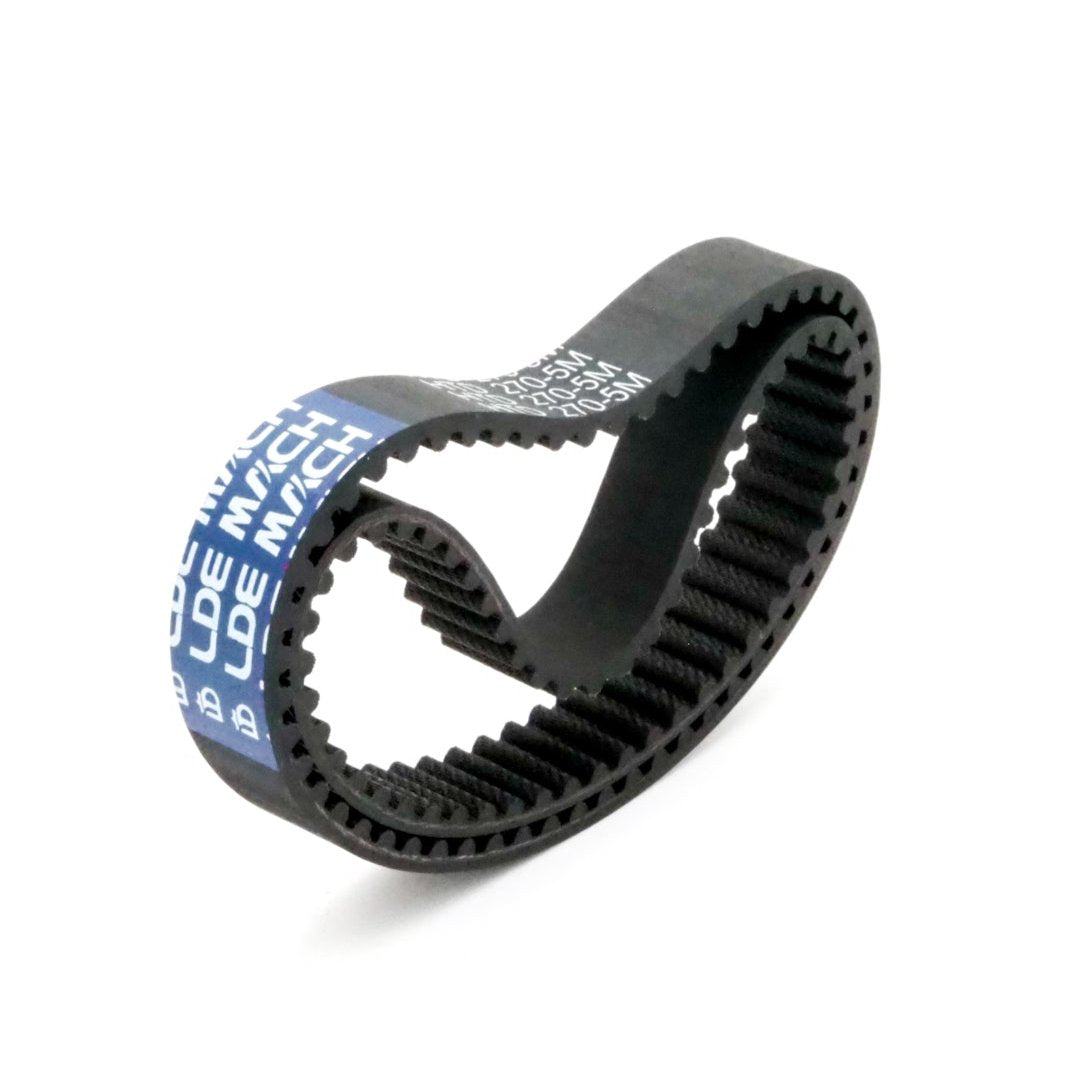
A belt usually fails far from home, at speed, with that unmistakable sharp slap from the drivetrain. If you are wondering how long eskate belts last, there is no clean mileage number. Real lifespan depends on power output, tension, alignment, belt quality, riding style, rider weight, terrain, and contamination.
On a well-engineered belt-drive electric skateboard with proper setup, belts commonly last 300–1,000+ miles (500–1,600+ km) per set. Some riders get more; aggressive, high-torque use or dirty conditions shortens it significantly. The difference is almost always setup and maintenance, not luck.

What actually determines belt lifespan
- Belt quality: Strong reinforcement cords, consistent tooth profile, and durable rubber compound make a big difference. Cheap or inconsistent belts stretch, shed teeth, or crack early.
- Alignment: Misaligned pulleys cause uneven loading, edge fraying, and accelerated wear. This is a top hidden cause of short belt life.
- Tension: Too tight creates excess heat, bearing load, and cord stress. Too loose leads to tooth skip under torque, damaging both belt and pulleys. Sweet spot = firm engagement with minimal slack.
- Riding conditions: Dust, sand, gravel, water, and grit grind belts fast. Hills, hard launches, heavy braking, and high rider weight increase sustained strain.
- Drivetrain design: Stable motor mounts, quality pulleys, and good clearance keep belts running true longer.
Signs a belt is nearing failure
Do not wait for the slap. Check regularly:
- Rounded, chipped, or missing teeth.
- Cracks in the belt body or between teeth.
- Edge fraying or fuzzy appearance (often alignment/debris).
- Glazing/shiny polish (heat or slippage).
- New noises: squealing, chirping, or harsher sound under load.
- Inconsistent power delivery during acceleration.
Uneven wear between belts usually signals a setup issue (alignment, tension, or motor mount shift).

Common reasons belts fail early
- Over-tensioning (guitar-string tight feels good in the garage but destroys components on the road).
- Poor alignment from shifted mounts or pulley spacing.
- Worn/damaged pulleys eating new belts.
- Aggressive riding + neglected cleaning after dirty/wet rides.
- Wrong belt size/profile for the pulleys.
How to make eskate belts last longer
- Check tension and alignment every time you change wheels or notice sound/feel changes. Controlled flex, no excessive slack.
- Clean the drivetrain after wet or dirty rides—remove trapped grit.
- Inspect before long rides: look for tooth damage, cracks, fraying.
- Use exact-match quality replacement belts.
- Carry a spare—compact, cheap insurance.
- For rough use, inspect proactively rather than waiting for obvious failure.
Belt drive durability vs other systems
Belt systems have consumable parts and need routine attention, unlike sealed hub motors. However, they offer advantages serious riders value: better wheel/tire options, stronger torque feel, quieter operation, easier servicing, and tunability. A well-designed belt drive is not fragile—it is maintainable. Compared to gear drive, belts are usually quieter and cheaper to refresh, though gears reduce some routine tasks at the cost of their own characteristics.
Premium platforms with robust motor mounts and precision components make belts far more reliable than on generic builds.
ONSRA belt-drive models (VELAR 2.0 Belt Drive, Challenger 2.0 Belt Drive) use engineered setups with readily available replacement belts designed for the system. This reduces guesswork and keeps downtime minimal.

Bottom line
Treat belts as performance wear items, not disposables. A good drivetrain helps them last; poor setup makes even quality belts fail early. Inspect often, fix root causes (alignment/tension/contamination), and replace proactively before big rides. Done right, belts become a minor routine item instead of a ride-ending failure.
Replacement belts and drivetrain parts: onsra.com/products/replacement-electric-skateboard-belts
Full lineup: onsra.com/collections/all-electric-skateboards

Why Choose a Swiss Engineered Electric Skateboard
How to Adjust Electric Skateboard Trucks