
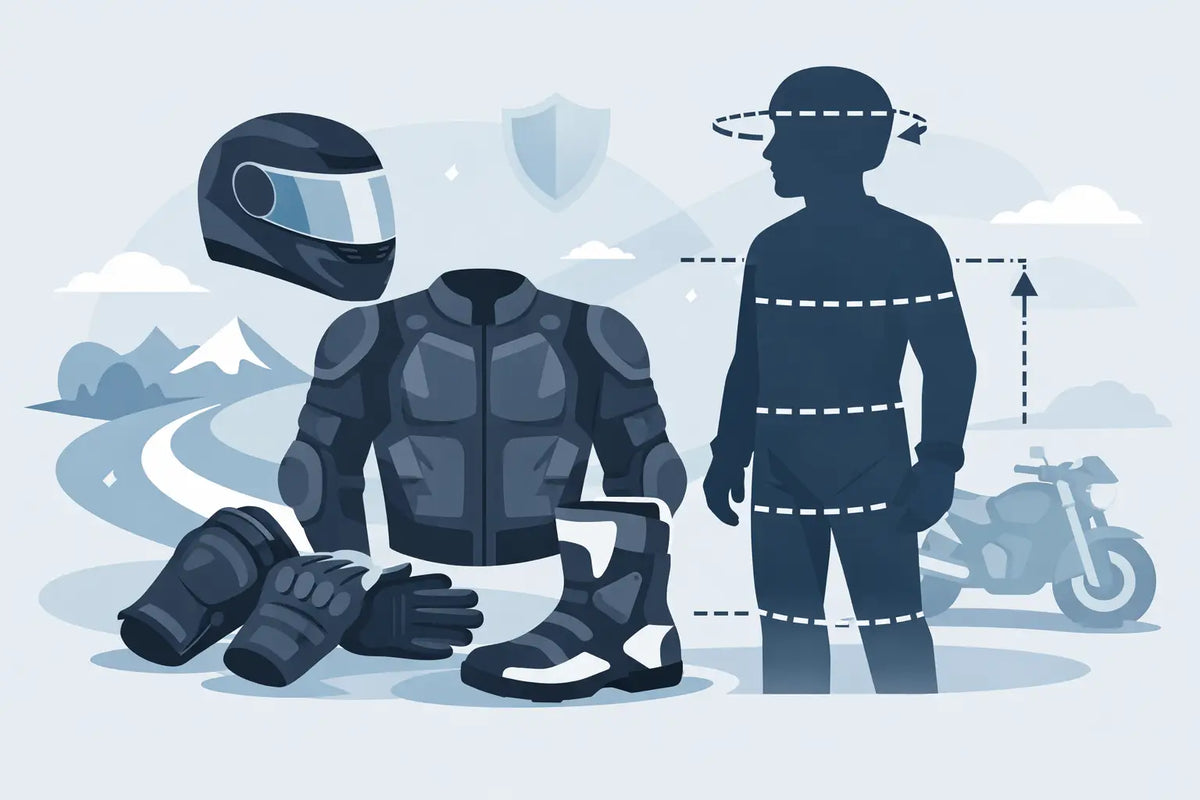
A helmet that shifts when you look over your shoulder, knee pads that slide down at the first carve, or gloves that bunch around the throttle can turn premium equipment into false confidence. This protective gear sizing guide is built for riders who move fast, ride hard, and expect their gear to stay exactly where it belongs.
Protective equipment is not one-size-fits-all, even when the product label says it is. Your riding position, board or bike setup, body proportions, and the type of riding you do all affect how gear should fit. The goal is simple: secure coverage with full range of motion. Nothing should pinch, rotate, rattle, or distract you when the road gets rough.
Start With Measurements, Not Your Usual Size
Clothing size is a weak starting point for protective gear. A medium jacket does not automatically mean a medium helmet, glove, or knee pad. Brands use different patterns, foam thicknesses, retention systems, and intended fit profiles. Measure first, then compare your result with the specific product's sizing chart.
Use a flexible tape measure, keep it level, and measure against bare skin or a thin base layer. Do not pull the tape tight enough to compress tissue. If you are between sizes, the right answer depends on the piece of gear. Helmets usually favor the smaller size if the shell and pads create an even, pressure-free fit. Pads and gloves may favor the larger size if the smaller option restricts circulation or joint movement.
Take your measurements at the time of day you normally ride when possible. Hands and feet can swell, and layers change the fit of pads and jackets. If you commute in cooler conditions but ride aggressively on weekends, test your setup with the layers you actually wear, not just a T-shirt in your living room.
Helmet Sizing: Secure Without Pressure Points
For e-skateboard and e-bike riders, the helmet is the first sizing decision to get right. Measure the circumference of your head about one inch above your eyebrows, passing above the ears and around the widest part at the back of your head. Record the number in inches or centimeters, depending on the chart.
A properly sized helmet sits level, low on the forehead, and covers the back of the head without blocking vision. It should feel uniformly snug before you tighten the retention dial or buckle. The retention system fine-tunes the fit. It should not be doing all the work.
The shake test
Fasten the helmet, then hold the shell and move it side to side and front to back. Your scalp should move with the helmet. If the shell rotates independently, it is too large or the internal padding is not matched to your head shape. Next, look down and up sharply. The helmet should stay planted without the chin strap digging into your throat.
Do not accept sharp pressure at the forehead, temples, or crown in the name of a close fit. That discomfort becomes a headache on longer rides, and riders who hate wearing a helmet are more likely to skip it. Try a different size only if the shell remains stable. Otherwise, you may need a different helmet shape.
For higher-speed riding, a full-face helmet can offer more coverage around the jaw and face. Fit it the same way, but check that the cheek pads are firm without forcing your cheeks upward or making speech difficult. Cheek pads usually settle slightly with use. A loose full-face helmet does not become safe because it feels comfortable in the first five minutes.
Knee and Elbow Pad Sizing for Real Movement
Pads need a different kind of security. They must stay centered over the joint through crouching, pushing, carving, braking, and stepping off your board or bike. Measure the circumference at the locations specified by the manufacturer, commonly above and below the knee or elbow. A pad's length matters too. Long shins, broad calves, and muscular thighs can change where the protection sits.
When trying on knee pads, bend your knee to a deep riding stance. The cap should remain centered over the kneecap, not pull toward the inside or slide below the joint. Stand, squat, and take several high steps. If you need to repeatedly pull the pad into place, it will not improve once you add sweat, vibration, and road movement.
Elbow pads should cover the point of the elbow when your arm is slightly bent, not only when it is straight at your side. Check your reach toward handlebars, a remote, or a low tuck position. A tight pad can limit steering inputs; a loose one can rotate away during a slide. Both are compromises worth avoiding.
Hard-shell pads provide dependable slide protection and are especially practical for high-speed pavement riding. Slimmer soft pads can be easier to wear under casual clothing and may suit lower-speed commuting. The trade-off is coverage and impact performance. Choose based on how and where you actually ride, not the image you want the gear to have.
Gloves and Wrist Guards: Fit for Controls and Falls
Your hands operate the controls, absorb vibration, and often reach the ground first in a fall. Measure around the widest part of your palm, excluding the thumb, then measure from the base of your palm to the tip of your middle finger if the brand provides a length measurement.
A riding glove should let you fully close your hand around a grip or remote without pulling hard across the knuckles. The fingertips should nearly reach the end of the glove without being compressed. Extra length at the fingertips can reduce feel and interfere with precise throttle or remote inputs.
Wrist guards need even closer attention. They should stabilize the wrist without cutting into the palm or restricting finger movement. Make a fist, extend your fingers, and simulate operating your setup. If the guard shifts, the straps may be too loose, the size may be wrong, or the design may not suit your hand shape.
Avoid sizing gloves up simply because you prefer a relaxed feel. Loose gloves can twist in a slide, and excess material can bunch under the palm. If you need room for insulated liners in winter, size and test the complete combination rather than guessing.
Build Your Protective Gear Sizing Guide Around Your Ride
The protective gear sizing guide that works for a relaxed neighborhood ride may not be enough for a VELAR run, a fast urban commute, or a technical e-bike descent. Speed raises the consequences of a poor fit. So do rough pavement, wet conditions, traffic, and long sessions where heat and fatigue make gear move more than it did during a quick fitting.
For performance-focused riders, prioritize gear that stays stable in an athletic stance. Look for adjustable retention systems, wide straps that distribute pressure, articulated pad construction, and materials that manage sweat. ONSRA riders often build their setups around capability and control, and protective gear should meet the same standard.
For commuters, comfort still matters because unused gear offers no protection. Select pieces you can put on quickly, wear for a full trip, and store without hassle. That may mean a lighter pad system for everyday routes, while reserving hard-shell protection and a full-face helmet for high-speed sessions. There is no single correct configuration, but there should be a clear reason behind each choice.
Check Fit Before Every Serious Ride
Sizing is not a one-time task. Helmet pads compress with wear, straps stretch, body weight can change, and a crash can damage parts that are not obvious at first glance. Before a serious ride, check that your helmet retention system locks securely, straps lie flat, pad closures are tight, and gloves have no torn seams or worn palms.
Replace gear after a significant impact when the manufacturer recommends it, particularly helmets. Foam can absorb energy by deforming, which means a helmet may look normal while no longer offering the same protection. Protective equipment is consumable performance equipment, not a permanent accessory.
The right fit disappears once you start riding. Your helmet stays quiet in the wind, your pads track your joints through every carve, and your gloves let you feel every control input. Take the extra few minutes to measure, test your range of motion, and adjust your setup before the next fast ride. Your gear should support confidence, not ask you to gamble on it.
CNC Skateboard Trucks Built for Hard Riding
How to Keep a Clean Electric Bike Drivetrain