


The first Li-ion pack I killed was not in a board. It was a drone battery I left fully charged on a sunny windowsill for a summer. It puffed up like a pillow. That was cheap tuition. A Onewheel pack is not cheap tuition, and it is the part of the board that decides how far you get every single ride.
This guide is everything I wish someone had told me back then: how to store a board over winter, when to charge and when to leave it alone, what actually wears cells out, and how much range a neglected pack really costs you. I have kept it honest. Every number comes from a source you can check (Battery University, a Sandia National Laboratories study, and Future Motion’s own support pages). Where nobody has published a number, I say so instead of guessing.
The short version
- Long storage: keep the pack at 40–50%, in a dry place around 10–15 °C (50–60 °F), and check it every month (Future Motion).
- Never charge a frozen pack. Li-ion should not be charged below 0 °C (32 °F) (Battery University).
- Don’t let it sit at 100% for days, and don’t let it sit near 0% at all.
- Heat plus a full charge is the worst combination. Keep the board out of hot cars and sun-baked garages.
- Ride it wet or crash it hard? Dry it, look it over, and stop using a pack that is damaged or swollen.
What actually kills a Li-ion pack
A Onewheel’s battery is a stack of lithium-ion cells with a battery management system on top. The BMS protects against the worst abuse, but it can’t stop slow chemical wear. Cells don’t usually die all at once. They lose capacity a little at a time, until one day your usual loop ends noticeably early. These are the five things that speed that up.

1. High charge plus heat
This is the big one. Battery University counts anything above 30 °C (86 °F) as elevated temperature for Li-ion and anything above 4.10 V per cell as high voltage, and it says that sitting at full charge in the heat for a long time can be more stressful than actually riding. Their storage table puts numbers on it (estimated capacity left after one year of storage, cobalt-based Li-ion):
| Storage temperature | Stored at 40% charge | Stored at 100% charge |
|---|---|---|
| 0 °C (32 °F) | 98% | 94% |
| 25 °C (77 °F) | 96% | 80% |
| 40 °C (104 °F) | 85% | 65% |
| 60 °C (140 °F) | 75% | 60% (after only 3 months) |
Source: Battery University BU-702 / BU-808. These are estimates for one cell family; BU notes that not all Li-ion behaves the same.
Look at the room-temperature row. Same garage, same year, and the only difference is how full the pack was: 96% left versus 80%. A board left full in a hot car through summer does even worse.
2. Deep discharge
Running a pack flat and then leaving it there is the slow, quiet way to ruin it. Battery University says Li-ion should not sit below 2 V per cell for any length of time: copper shunts can form inside, and a cell that has been that low may be unstable when recharged. BU also recommends storing Li-ion in a charged state, ideally around 40%, so it doesn’t drift into sleep mode. Future Motion says the same thing in plainer words: storing the board with a dead battery for a long time can degrade it, so plug it in before you put it away (winter guide).
3. Charging in the cold (lithium plating)
Riding in the cold is fine. Charging a cold pack is not. According to Battery University BU-410, consumer Li-ion should not be charged below 0 °C (32 °F). The pack can look like it’s charging normally while metallic lithium plates onto the anode, and that damage is permanent and makes the cells more vulnerable to failure. BU puts fast charging between 5 °C (41 °F) and 45 °C (113 °F), says to lower the current below 5 °C (41 °F), and recommends 10–30 °C (50–86 °F) for the best results.
Future Motion’s advice fits this neatly: if the board was left out in the cold, bring it in and let it warm up to about 15 °C (60 °F) before you ride, and a Temperature Error means the battery is too cold to use yet (source). I wait the same before I plug it in.
4. High currents
Hard charging and hard pulling both add wear. Battery University BU-808b shows faster capacity loss when cells are cycled at 2C and 3C than at 1C and points to lithium plating from rapid charging as a likely cause. A multi-year Sandia National Laboratories study (Preger et al., 2020) cycled commercial NMC, NCA and LFP cells and found that, even inside the manufacturers’ specs, the cycle count before reaching 80% capacity varied by thousands of cycles depending on temperature, depth of discharge and discharge rate. The authors also stress that these trends depend on the chemistry, so one rule doesn’t fit every cell.
What that means for riding: full-throttle hill climbs on a pack that’s already low, or with a heavy rider, push more current through each cell than cruising does. You don’t have to ride like a librarian. Just don’t make max-power runs on an empty pack your daily habit, and stick to the charger the board came with.
5. Water and impacts
No lab number here, just common sense and the manufacturer’s word. Future Motion calls its boards water-resistant, not waterproof, and asks you to wipe the board down and let it dry fully before charging after a wet ride (source). In snow, brush it off before it melts indoors (source). And if a pack looks damaged or no longer holds a charge, don’t use it; contact support (source). Battery University adds that stressed Li-ion cells can seem fine but become more sensitive to mechanical abuse (source). A hard crash onto the battery side of the board is worth a careful look.
When and how to charge
Don’t park it at 100%. Battery University estimates that a typical Li-ion cell charged to 4.20 V gives 300–500 cycles, while stopping at 4.10 V roughly doubles that to 600–1,000 cycles, at the cost of some capacity per charge. Future Motion built exactly this trade-off into the Onewheel GT: a “90% Charge” setting in the app that, in their words, can extend battery cycle life significantly, with less range per ride (source). If your board has it and you don’t need every last mile, I’d turn it on.
Future Motion is also clear that leaving the board on the charger for several days won’t damage it, but you shouldn’t leave it there for months (source). And here’s a Onewheel-specific detail I like: without the 90% setting, they suggest starting a full-charge ride on flat ground or uphill. A full pack has nowhere to put the energy from braking downhill.
Do a full charge now and then. That sounds like a contradiction, but it isn’t. Future Motion recommends charging to 100% if range seems off, because it helps recalibrate and balance the cells. Just don’t store it full (source). Their older charging page also suggests leaving the charger on overnight from time to time so the pack can balance (source).
Shallow beats deep. Partial cycles are easier on Li-ion than full ones. Battery University’s estimate for NMC cells: about 300 cycles to 70% capacity at 100% depth of discharge, about 400 at 80%, and about 1,000 at 40% (source). Li-ion has no memory effect, so topping up after a short ride is completely fine.
Mind the temperature. Charge indoors, not in a freezing garage and not on a hot balcony. After a long, hard ride on a warm day I let the board cool down before plugging in. Battery University notes that many chargers refuse to charge above 50 °C (122 °F) anyway (source).

Winter storage, step by step
If you’re putting the board away for the season, this is Future Motion’s own routine (from their winter guide and support page), and it lines up with the lab data above:
- Charge or ride it to 40–50%. Not full, not empty.
- Clean and dry it. Get the grit and moisture off before it goes in a cupboard.
- Store it dry, around 10–15 °C (50–60 °F). Future Motion specifically warns that a garage or shed that gets colder overnight can put the battery at risk, and suggests an indoor closet instead.
- Check it every month. If the level has dropped below 40%, top it back up to 40–50%.
- Charge it at least every two months, which Future Motion lists as a battery requirement that can affect your warranty.
Why the monthly check if Li-ion barely self-discharges? Because “barely” isn’t zero, and the board’s electronics draw a little too. Battery University gives about 2% per month for Li-ion at 0 °C (32 °F) and 50% charge, and much more when warm and full (source). A five-minute check once a month is cheap insurance against coming back in spring to a flat pack.

Riding in the cold
Cold doesn’t just slow you down, it slows the battery down. Internal resistance rises in the cold, which cuts discharge performance (Battery University). Future Motion is upfront about it: if it’s cold enough for a winter parka, don’t expect your summer range (source). Neither source gives a single percentage for that, and I won’t make one up. It depends on the temperature, the pack and how you ride.
Most of that cold-weather range loss comes back once the pack warms up. The damage that does stick comes from charging it cold. So: ride, bring it in, don’t leave it in the car overnight, let it warm up, then charge. Battery University gives a discharge window down to −20 °C (−4 °F) for Li-ion, but the charge window stops at 0 °C (32 °F) (source).

Cared-for vs neglected: what it means for range
I don’t have a lab and I’m not going to invent a test. What I can do is take Battery University’s published one-year storage figures and apply them to an example board that does 25 km (15.5 mi) on a fresh pack. Assuming range scales roughly with capacity, that looks like this:
| One year of storage | Capacity left (BU estimate) | Example range (km) |
|---|---|---|
| 40% charge, cool room (25 °C (77 °F)) | 96% | 24 km (14.9 mi) |
| 100% charge, same room (25 °C (77 °F)) | 80% | 20 km (12.4 mi) |
| 100% charge, hot garage or car (40 °C (104 °F)) | 65% | 16.3 km (10.1 mi) |
An illustration built from BU-702 estimates, not a measurement of any board. Real range also depends on rider weight, terrain, tire pressure, temperature and riding style.
Same board, same year, and up to a third of your range gone just because of where and how it sat. Then add cycling. Sandia’s data shows that cycling conditions alone can shift the cycle count to 80% by thousands of cycles (source), and Battery University reports a Chalmers University finding that limiting an EV battery to about 50% state of charge extended its expected lifetime by 44–130% (source). Those are different batteries in different settings, so I wouldn’t put a precise number on a Onewheel. The direction is the same everywhere, though: cool, mid-charge and gentle beats hot, full and flat.

Summer is the season that really ages a pack
Winter gets all the attention, but if you look at the storage table again, the worst numbers are all on the hot side. Battery University calls heat the worst enemy of batteries (source), and the combination that hurts most is heat plus a full charge (source). That’s exactly what a board gets when you charge it to 100% in the morning and then leave it in a parked car or on a sunny balcony all afternoon.
I haven’t found a credible published figure for how hot a closed car gets in a given climate, so I won’t quote one. You don’t need it to see the risk: a car that feels too hot to sit in is already well past the 30 °C (86 °F) that Battery University calls elevated for Li-ion. My summer routine is simple:
- Charge close to when I ride, not the night before a day the board will spend sitting in the heat.
- Park the board in the shade, and never in a closed trunk on a hot day.
- After a long, hard ride on a warm day, I let the board cool before plugging it in. BU notes that charging or discharging hot can cause gas buildup, which can vent a cylindrical cell or swell a pouch cell (source).
- If I’m not riding for a week, I bring it down to the middle of the range rather than leaving it full.
How much to trust the battery percentage
The percentage in the app is an estimate, not a measurement. Li-ion voltage is fairly flat between about 20% and 100%, and temperature shifts it too, so Battery University says the readings from a built-in battery management system are reasonable but seldom exact (source). That explains a few things riders notice:
- After a cold ride the number can look low, then creep up once the pack warms indoors. That’s the cold talking, not the battery recovering capacity.
- Right after charging or a hard ride, the voltage needs time to settle. BU suggests letting a pack rest about 90 minutes before reading it for storage (source). If you’re aiming for 40–50% before winter, check it again the next day.
- If the estimate drifts and range feels off, a full charge helps the board recalibrate, which is exactly what Future Motion recommends (source). You don’t need to drain the pack to zero for that. Battery University is clear that Li-ion has no memory and doesn’t need periodic full discharges (source).
Flying and shipping with a board battery
This is where battery size matters. Under the FAA’s PackSafe rules, spare lithium-ion batteries must go in carry-on baggage only, are limited to 100 Wh each (larger ones up to 160 Wh need airline approval), and need their terminals protected from short circuits. Airlines can set stricter limits, so check with yours before you go (source). A full-size self-balancing board pack is well past those sizes, so in practice it doesn’t fly with you.
For shipping, Battery University notes that IATA and the FAA require removable Li-ion packs to be shipped at 30% state of charge, partly because a pack below 50% is less volatile if something goes wrong (source). Same lesson as storage: a half-empty battery is a calmer battery. And whatever you’re carrying, the FAA notes that damage, overheating, water exposure and overcharging are all factors in thermal runaway (source). A dented or wet pack should never get on a plane.
When a pack is on its way out
Range dropping slowly over years is normal aging. Signs that something is actually wrong are different: a pack that no longer holds a charge, range that collapses suddenly, swelling, damage to the case, or a battery that gets unusually hot. Future Motion’s instruction is simple: if the pack looks damaged or won’t hold a charge, stop using it and contact their support (source). To their credit, they also offer a battery replacement service with round-trip shipping and recycling of the old pack (source). For a board you love, that’s worth knowing before you go hunting for a third-party fix.
Why we went with swappable batteries on the ZENO
Full disclosure, this is the ONSRA blog, so here’s where we come in, and I’ll keep it short. Everything above applies to our boards too. Chemistry doesn’t care about the logo. But building the ZENO around a swappable pack does make some of these habits easier. According to the ZENO battery page, there are two plug-and-play versions: a 99 Wh pack that is IATA-approved for air travel, and a 259 Wh extended pack for more range on the ground.
In practice that means you can carry just the battery inside to a warm room to charge or to store it at half charge for the winter, while the board stays in the hallway. It also means a tired pack is a part you can swap, not a reason to retire the board. It doesn’t make a battery live forever. It just makes good habits easier.
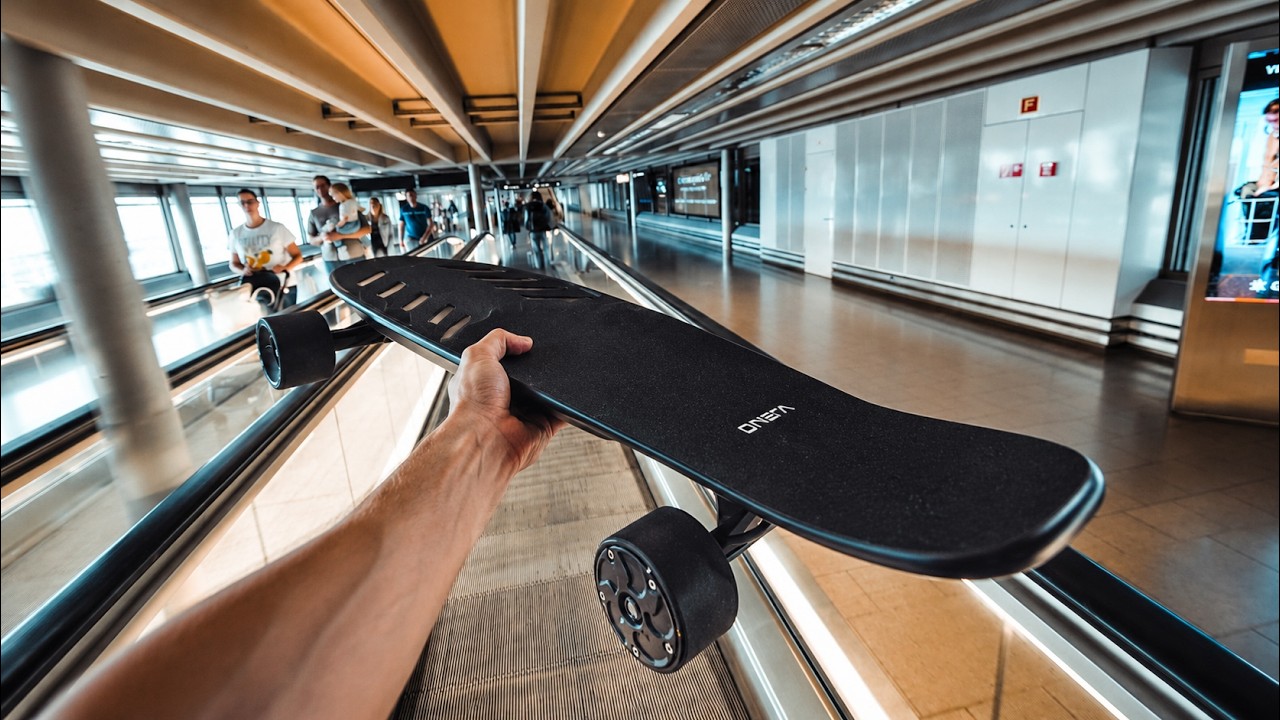
Flying with a board comes down to the battery. Tap to play.

Quick answers
Can I leave my Onewheel on the charger overnight?
Yes. Future Motion says several days on the charger won’t damage the board, just don’t leave it there for months (source). For long breaks, use the 40–50% storage routine instead.
What charge level should I store it at over winter?
40–50%, in a dry place around 10–15 °C (50–60 °F), checked monthly (source).
Is riding in the cold bad for the battery?
Riding isn’t the problem. You’ll get less range, but the real risk is charging below 0 °C (32 °F) (source). Warm the board up indoors first.
How many cycles does a Onewheel battery last?
I couldn’t find a cycle-life figure published by Future Motion, so I won’t guess. For context, Battery University says manufacturers typically specify consumer Li-ion conservatively at 300–500 full cycles, and that the real number depends heavily on depth of discharge, charge level and temperature (source).
Should I drain it to zero once in a while?
No. Li-ion has no memory effect (source). If range seems off, Future Motion recommends a full charge to rebalance the cells, not a full discharge (source).
Checklist to save
Battery care, any Li-ion board
- Storing longer than a few weeks: 40–50%, dry, about 10–15 °C (50–60 °F), check monthly.
- Never charge below 0 °C (32 °F). Let a cold board warm up first.
- Don’t leave it sitting full. Use a 90% limit if your board has one.
- Full charge now and then to balance the cells, then ride it down.
- Never store it empty. Charge it at least every two months.
- No hot cars, no sun-baked garages, no charging while it’s hot.
- Dry it after wet rides before charging. Retire damaged or swollen packs.
Sources
- Battery University, BU-808: How to Prolong Lithium-based Batteries
- Battery University, BU-808b: What Causes Li-ion to Die?
- Battery University, BU-410: Charging at High and Low Temperatures
- Battery University, BU-702: How to Store Batteries
- Preger et al. (Sandia National Laboratories), Degradation of Commercial Lithium-Ion Cells as a Function of Chemistry and Cycling Conditions, J. Electrochem. Soc. 167 (2020)
- Future Motion, Onewheel Winter Riding Tips & Storage
- Future Motion Support, How to Store Your Board
- Future Motion, Charging (Onewheel GT)
- Future Motion, Charging (Onewheel+ / XR)
- FAA PackSafe: Lithium Batteries
Onewheel is a trademark of Future Motion, Inc. ONSRA is not affiliated with Future Motion. Always follow the manual for your own board.
Speed wobble en skate électrique : pourquoi ça arrive et comment l’arrêter