
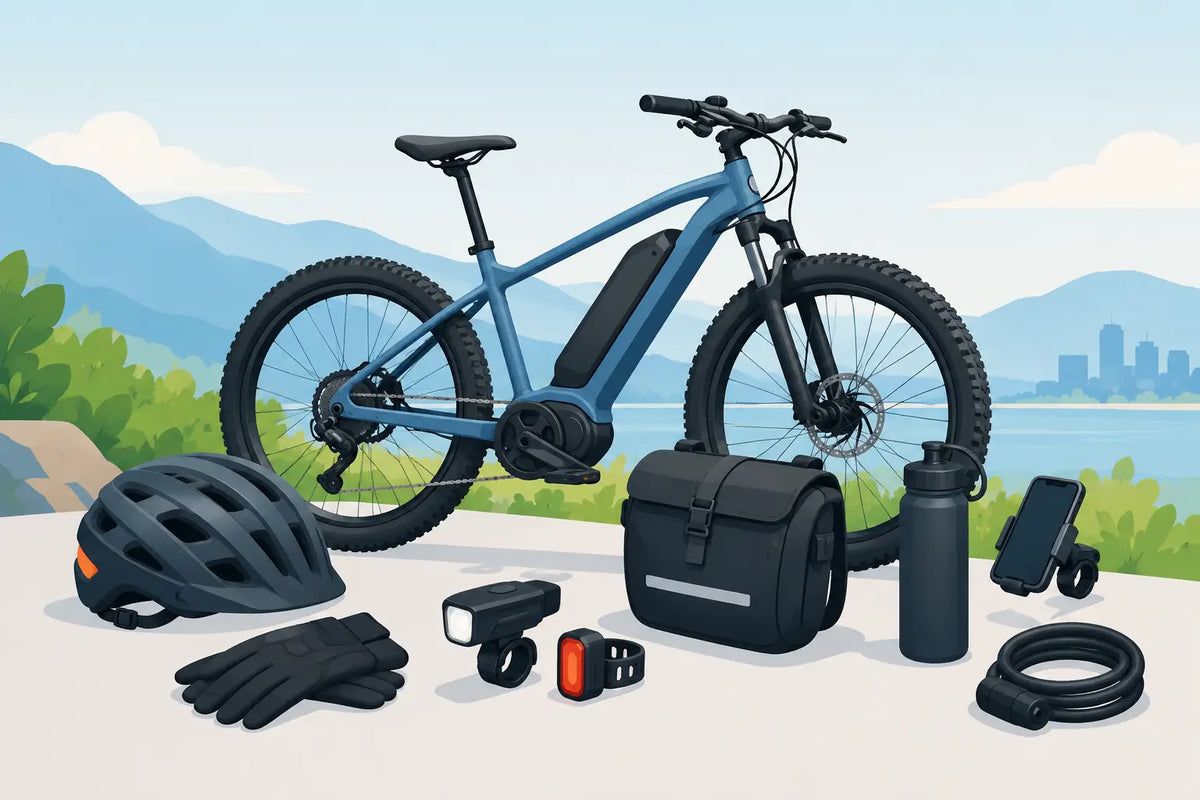
A capable e-bike is only half the setup. The best electric bike accessories solve the problems that show up after the first few serious rides: where to put your gear, how to lock a high-value bike, what happens when the weather turns, and how to stay visible when traffic gets unpredictable.
For performance-minded riders, accessories should earn their place. The right equipment protects the bike, protects the rider, and makes daily miles easier without adding rattles, drag, or unnecessary clutter. Start with the essentials, then build around how and where you actually ride.
The Best Electric Bike Accessories Start With Safety
An e-bike's assisted speed changes the stakes. You can cover ground quickly, carry more momentum into intersections, and encounter greater braking forces than on a casual pedal bike. That makes well-chosen protective equipment a practical performance upgrade, not an afterthought.
A properly rated helmet
A quality helmet is the first purchase to make if it did not come with your bike. Look for a secure retention system, comfortable ventilation, and coverage that matches your riding style. Commuters often prefer a clean urban helmet with integrated visibility features, while faster or rougher riding may justify more rear and side coverage.
Fit matters more than branding. The helmet should sit level, remain stable when you move your head, and feel snug without pressure points. If you ride year-round, choose a model with removable pads or enough room to accommodate a thin cap in colder conditions.
Gloves and eye protection
Gloves improve grip in rain, reduce vibration on longer rides, and provide a layer of protection if you put a hand down in a fall. Full-finger gloves are the stronger all-season choice, especially for riders who handle cargo, locks, or tools during a commute.
Clear or low-light eyewear can be just as valuable as sunglasses. At e-bike speeds, wind, dust, insects, and road spray become genuine distractions. A lens that gives you a sharp view of potholes and traffic is a safety component, not just riding apparel.
Security Gear Is Non-Negotiable
A premium e-bike is a target. Thin cable locks and casual locking habits are not enough for a bike with a high replacement cost. Build your security setup around the time and location where the bike will be parked, not the best-case scenario.
A hardened U-lock or heavy-duty chain should secure the frame to an immovable rack. If possible, add a second lock for the front wheel or use a locking axle system. The goal is to make removal slow, loud, and inconvenient. A compact alarm can add another layer of deterrence, particularly for quick stops outside a store or coffee shop.
Your lock needs a practical carrying solution. A frame mount keeps it from bouncing around in a bag, while a rear rack bag works well for heavier chains. Avoid hanging a loose lock from the handlebar. It can damage the bike, interfere with steering, and create an ugly rattle every time the road gets rough.
Lighting That Matches Real Riding Conditions
Many e-bikes include lights, but not every stock system is powerful enough for dark roads, wet weather, or fast suburban riding. The strongest setups use a bright forward light with a controlled beam pattern and a rear light that remains visible from wide angles.
A forward light should illuminate the road surface far enough ahead to let you react at your normal cruising speed. More lumens help, but beam shape matters too. A poorly aimed high-output light can blind oncoming riders and drivers while still leaving the pavement directly ahead unevenly lit.
For the rear, a flashing daytime mode improves visibility in traffic. At night, use a steady or pulse mode that is noticeable without becoming distracting. Helmet-mounted lights can add visibility at intersections because they move with your line of sight, but they should supplement a bike-mounted light rather than replace it.
Cargo Accessories Make an E-Bike More Useful
Electric assistance turns errands that once required a car into realistic bike trips. The key is carrying equipment that is rated for the load and installed correctly.
A rigid rear rack is the foundation for most utility builds. Check its weight rating, mounting points, and compatibility with your frame before loading it with panniers, a trunk bag, or a child seat. Cheap racks can flex under load, loosen over time, and make the bike handle poorly.
Panniers are the best option for groceries, work gear, and heavier items because they place weight low and close to the bike's centerline. A waterproof pair is worth it for riders who cannot choose their commute around the forecast. For lighter daily carry, a structured top bag offers fast access to a jacket, charger, repair kit, and lock.
A front basket can be useful, but it comes with a trade-off. Weight on the handlebar affects steering more noticeably, especially at low speeds. Keep front loads modest and secure everything against bumps. If you carry dense or heavy cargo regularly, rear-mounted storage will feel more stable.
Comfort Upgrades Should Fix a Specific Problem
Not every comfort accessory improves the ride. Oversized padded seats, soft grips, and suspension add-ons can sometimes mask a poor fit while reducing control. Before buying anything, identify where fatigue starts: hands, saddle, back, neck, or feet.
A suspension seatpost can take the edge off broken pavement for riders without rear suspension, but it changes saddle height and pedaling feel. Ergonomic grips help when wrist pressure is the issue, while a properly adjusted handlebar position can solve the same problem more completely. A quality saddle is highly personal, so prioritize shape and support over thick foam.
For wet-weather riders, full-coverage fenders are among the most useful upgrades available. They keep road spray off your back, shoes, drivetrain, and any rider behind you. Choose fenders with sturdy mounting hardware and enough tire clearance to prevent rubbing when mud or debris builds up.
Power and Repair Accessories for Longer Range
Range anxiety is usually a planning issue, but the right accessories reduce the chance that a minor problem ends a ride. Carry the charger only when you have a confirmed place to use it and a safe window to charge. Batteries and chargers deserve care: use the manufacturer-approved equipment, keep connectors clean, and avoid charging a damaged battery.
A compact repair kit should include tire levers, a patch solution or plug kit appropriate for your tire type, a mini pump or inflator, and the hex keys needed for common adjustments. If your e-bike uses a large axle nut or a specific wheel fastener, make sure your kit can handle it. There is no value in carrying generic tools that cannot remove your wheel.
For riders covering longer distances, a spare tube can still make sense even with tubeless tires. Sealant handles many small punctures, but sidewall damage and larger cuts are another story. Keep your kit organized in a weather-resistant pouch so it is ready when you need it, not scattered at the bottom of a pannier.
Phone Mounts and Mirrors Need a Secure Fit
Navigation is one of the best reasons to add a phone mount, but only if the mount locks the device in place over rough pavement. Choose a system with a positive mechanical retention method, not a loose silicone strap. Position it where you can glance at directions without taking your eyes off the road for long.
Mirrors are particularly useful for commuters, cargo riders, and anyone traveling on roads with vehicle traffic. A bar-end mirror generally gives a clean field of view, while a handlebar-mounted option may be easier to adjust with gloves. The right mirror should stay stable at speed and show the lane behind you, not your elbow.
Build for Your Ride, Not the Accessory Aisle
The best electric bike accessories are not the ones with the most features. They are the ones that match your route, riding speed, cargo needs, and storage situation. A city commuter may prioritize locks, lights, fenders, panniers, and a mirror. A weekend explorer may get more value from a repair kit, extra visibility, weather protection, and a stable phone mount.
Choose equipment with solid mounting hardware, realistic load ratings, and serviceable parts. That approach reflects the same standard serious riders expect from their bikes: engineered for use, built to last, and ready for the miles that actually matter.
Best Ebike Commuter Locks for Real Security
How to Clean Skateboard Bearings the Right Way