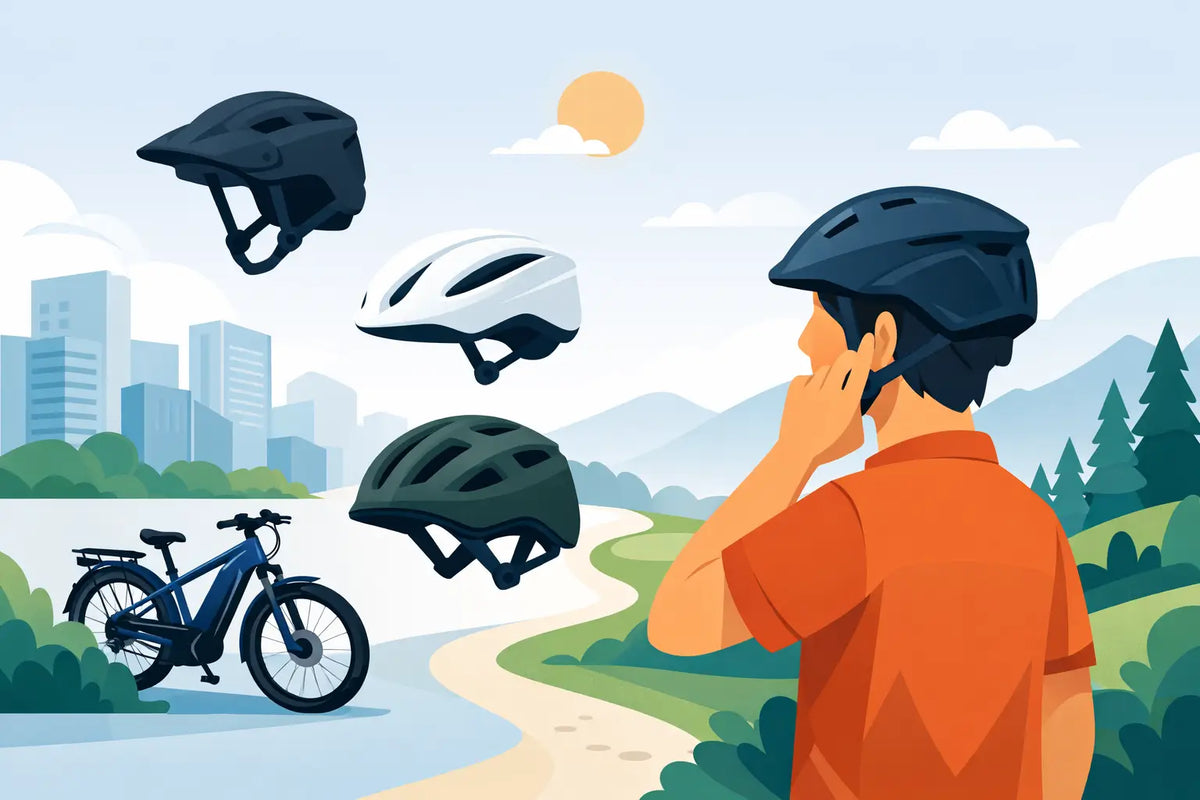
A helmet that feels fine at 12 mph can become the weak link at 28 mph. That is the reality of electric riding: faster cruising speeds, heavier bikes, longer commutes, and less time to react when traffic, gravel, or a bad line changes the plan. Knowing how to pick ebike helmet protection starts with matching the helmet to your actual riding, not simply grabbing the lightest bike lid on the shelf.
The right helmet should fit precisely, stay stable when you look over your shoulder, provide coverage where it matters, and carry legitimate safety certification. Style is personal. Fit and impact protection are not.
Start With Your Real Speed and Riding Environment
An e-bike helmet is not one category with one perfect answer. A rider using pedal assist on protected bike paths has different needs from a commuter moving through dense city traffic at 25 mph. A rider taking a fat-tire e-bike onto loose trails may need a different setup again.
Think about your normal, not occasional, ride. If your e-bike routinely assists to higher speeds, you ride alongside cars, or your route includes rough pavement and intersections, prioritize extended coverage and stronger impact-management features. More coverage usually means slightly more weight and less airflow than a minimalist road helmet. That trade-off is often worth making when your average speed is higher and the consequences of a crash are less forgiving.
For relaxed, lower-speed riding, a well-built commuter or bicycle helmet may be the right tool. For faster Class 3-style commuting and performance riding, look toward helmets designed for higher-energy e-bike use. For technical off-road terrain, a trail helmet with a visor and deeper rear coverage can make sense. A full-face mountain bike helmet becomes a serious consideration when steep descents, jumps, aggressive terrain, or high-speed off-road use are part of the ride.
Do not buy a full-face helmet just because an e-bike is fast, and do not dismiss one because it looks excessive. Choose based on your actual exposure. A long urban commute at speed often favors a high-coverage open-face e-bike helmet; repeated technical downhill riding may justify full-face protection.
Check the Safety Standard Before the Features
The foundation is a helmet carrying the appropriate certification label, not a marketing claim printed on the box. For riders in the United States, look for CPSC certification. It confirms the helmet meets the federal safety standard for bicycle helmets.
For faster e-bike use, many riders also seek NTA 8776 certification. This Dutch standard was developed specifically for speed pedelec riding and tests helmets at higher impact speeds than traditional bicycle standards, while generally requiring more coverage around the temples and rear of the head. It is a meaningful signal for riders who regularly travel at higher assisted speeds.
A helmet can carry more than one certification, and that is often useful. ASTM ratings may be relevant for certain mountain bike or downhill applications. A DOT motorcycle helmet is a different product category altogether. It may offer a higher level of protection in some impacts, but it is heavier, hotter, and built around different use assumptions. It is not automatically the best choice for every e-bike ride.
Certification does not make a helmet indestructible. It means the design has passed defined test requirements. A helmet that fits poorly, is damaged, or is worn unbuckled cannot do its job as intended.
MIPS and Other Rotational-Impact Systems
Most crashes are not perfectly straight-on impacts. Your head can strike and rotate at the same time. That rotational motion is one reason many premium helmets use a slip-plane system, such as MIPS, or a brand-specific alternative.
These systems allow a small amount of movement between layers during an angled impact, helping manage rotational forces. They are worth considering, particularly for riders spending real time in traffic or riding faster e-bikes. But do not let one feature badge override everything else. A correctly fitted, certified helmet without a rotational-impact system is a better choice than an advanced model that shifts around on your head.
Fit Is the Performance Feature You Feel Every Ride
A helmet should feel secure before you tighten the chin strap. Start by measuring the circumference of your head about an inch above your eyebrows, then use the manufacturer sizing chart. If you sit between sizes, try both when possible. Head shape matters as much as measurement.
Place the helmet level on your head, with the front edge roughly one to two finger widths above your eyebrows. It should cover your forehead without tipping backward. Tighten the rear retention dial until the helmet feels firmly planted, but not pressure-heavy.
Now perform a simple stability test. With the chin strap unfastened, try to roll the helmet forward and backward. Your skin should move with it. If it slides freely, rocks from side to side, or leaves a large gap above the brow, it is not the right fit.
Once buckled, the straps should form a clean V just below each ear. The chin strap should be snug enough that only one or two fingers fit beneath it. Open straps are not a casual comfort setting. They turn a protective helmet into an accessory that can move or come off in a crash.
Pressure points matter too. Wear the helmet indoors for 10 to 15 minutes. A mild, even hold is normal. Localized pain at the forehead or temples means the shell shape is wrong for your head. Do not assume it will break in. EPS foam does not mold itself into a better fit over time.
Choose Coverage and Construction for Your Ride
Helmet shells are commonly built around an EPS foam liner, which crushes to absorb impact energy, protected by a thin outer shell. Premium construction is not just about a polished finish. In-mold designs bond the shell and foam together, often improving durability while keeping weight under control. Better designs also manage ventilation without creating a helmet that feels fragile or unstable.
Look closely at the helmet profile. More rear and temple coverage is valuable for e-bike riders because crashes do not always happen in a clean, forward direction. A commuter-focused helmet with a deeper wraparound shape can offer more practical protection than an ultralight road helmet designed mainly around weight savings.
A visor can help on trails, in low sun, and in wet conditions. In high-speed road use, make sure it does not obstruct your upward vision or catch too much wind. Some commuting helmets add an integrated light, reflective details, or a magnetic buckle. These are useful ownership features, especially for riders who start early or finish after dark, but they should come after fit, coverage, and certification.
Ventilation, Weather, and Eyewear Matter More Than You Think
A helmet you hate wearing is a helmet that eventually stays at home. Ventilation is not cosmetic when you are pedaling, carrying gear, and riding through summer heat. Large vents help airflow, but the best design depends on your speed, climate, and route. Faster road riding naturally pushes more air through a helmet. Slow climbing, stop-and-go commuting, and humid conditions demand better vent placement.
For cold or wet climates, consider whether the helmet works with a thin skull cap, ear coverage, or a hood that does not compromise fit. Never force a thick beanie under a helmet. It can create pressure points and reduce the retention system's ability to hold the helmet correctly.
If you wear glasses, bring them when trying on helmets. Check that the arms sit naturally, the front edge does not block your view, and any visor leaves enough room for your eyewear. Riders using goggles for trail riding should confirm compatibility before committing to a helmet.
Avoid These Common Buying Mistakes
Price alone does not identify a good helmet. Expensive models can justify their cost through lower weight, ventilation, refined fit systems, rotational-impact technology, and improved finishing. But an affordable certified helmet that fits correctly remains a far smarter choice than a premium helmet bought for its logo.
Avoid used helmets with an unknown history. EPS foam can be compromised by an impact without obvious exterior damage. The same goes for a helmet you have crashed in, even if it looks mostly intact. Replace it after a significant hit, and inspect it regularly for cracks, crushed foam, loose retention hardware, damaged straps, or degraded pads.
Also avoid buying too large for the sake of comfort. A loose helmet feels less restrictive in the store, but it cannot stay positioned correctly when you need it most. Comfort should come from the right shape, padding, ventilation, and adjustment range, not extra empty space.
How to Pick an Ebike Helmet You Will Actually Use
The strongest choice is usually the helmet that fits your head, matches your speed and terrain, carries credible certification, and is comfortable enough to wear every ride. For serious e-mobility riders, that often means a CPSC-certified helmet with deeper coverage, a stable retention system, and preferably an additional high-speed e-bike standard such as NTA 8776 when your riding supports it.
Treat the helmet like any other performance-critical component of your setup. It should be chosen for the forces, conditions, and miles you actually put in. Get the fit right, replace it when its job has been tested, and wear it every time the ride gets moving.
How to Replace Eskate Belts Without Losing Power
What Skateboard Durability Test Results Show