
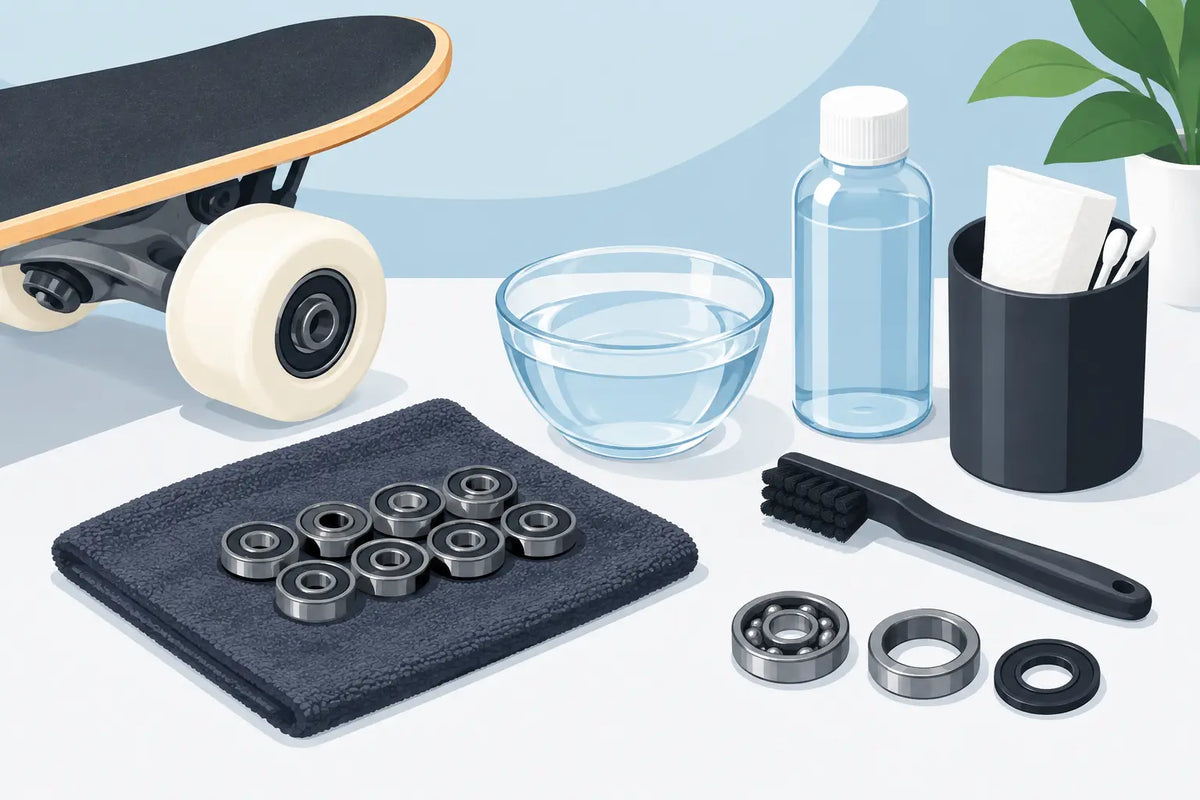
A fast board should roll clean, quiet, and predictable. If your wheels feel rough, sound like sandpaper, or stop spinning sooner than usual, the problem is often packed-in grit or dried lubricant. Knowing how to clean skateboard bearings properly restores efficiency without turning a simple maintenance job into a replacement-parts problem.
For electric skateboard riders, smooth bearings matter beyond free-spin. Dirty bearings add rolling resistance, reduce coast efficiency, and can make an otherwise dialed setup feel slow or uneven. Clean them when they need it, not every weekend out of habit.
When Your Bearings Need Attention
Bearings live inches from road spray, dust, trail debris, and puddles. A little dirt on the outside is normal. What matters is what has worked past the shields and into the races.
A dry, gritty sound while spinning a wheel is the obvious sign. Roughness you can feel while turning the wheel by hand is another. You may also notice one wheel slowing far sooner than the others, a light clicking noise, or rust-colored staining around the bearing shield.
Do not judge bearing health by spin time alone. A wheel that spins for a long time with no load can still feel unstable under a rider, while a correctly greased bearing may not free-spin dramatically but can remain smooth and protected. The real test is consistent, quiet rotation with no grinding, binding, or side-to-side play.
If a bearing has been submerged, ridden hard through saltwater, or shows visible corrosion, cleaning may not be worth the risk. Replace it. Bearings are critical wear components, and a seized or failing unit is not where performance riders should gamble.
What You Need to Clean Skateboard Bearings
Set up on a clean bench or tray where small parts cannot roll away. You will need a skate tool or the correct socket for your axle nuts, a bearing puller or axle edge, clean lint-free rags, a small container, bearing cleaning solvent, and lubricant made specifically for skateboard bearings.
Avoid using water, household degreasers, or thick general-purpose grease. Water leaves corrosion behind unless everything is dried immediately and completely. General degreasers can leave residue or damage certain shield materials. Heavy grease may protect well in some industrial applications, but it creates drag and attracts contamination in skateboard use.
For the cleaner, use a dedicated bearing cleaner or a suitable fast-evaporating solvent designed for metal components. Work in a ventilated area, keep it away from flames, and wear gloves if your skin is sensitive. Solvent is effective because it breaks down old oil and road grime, but it is not harmless.
How to Clean Skateboard Bearings Step by Step
Remove the wheels carefully
Power off an electric skateboard completely before you start. Place it upside down on a stable surface, remove the axle nuts, and slide off each wheel. Keep speed rings, washers, spacers, and hardware organized in the order they came off.
On many setups, you can use the axle as a simple bearing puller. Place the wheel partly onto the axle so the axle catches the inner edge of the bearing, then gently lever the wheel away. Do not pry against the outer shield with a screwdriver. That can bend the shield, damage the bearing seat, or scar the wheel core.
Remove both bearings from each wheel and set the spacers aside. If your board uses bearing spacers, reinstalling them correctly is not optional. They support the inner races under axle compression and help prevent side loading during hard carving and high-speed riding.
Remove shields only if they are removable
Most skateboard bearings use rubber or metal shields. Rubber shields are often removable with a fine pick or hobby blade. Ease the retaining edge out gently and lift the shield without bending it. Metal shields may be removable, but some are crimped or non-serviceable.
If the shield is fixed, do not force it. You can clean the bearing externally and add a small amount of lubricant at the shield gap, but a bearing that remains gritty after this treatment should be replaced.
Keep shields paired with their original bearings if possible. They are small, but bent or contaminated shields can compromise the entire job.
Flush out the old contamination
Place the unshielded bearings in your cleaning container, add enough cleaner to cover them, and seal the container. Shake it for 30 to 60 seconds. Let the bearings sit briefly if the lubricant is especially dirty, then shake again.
The solvent should turn gray or black as it lifts old oil, fine dust, and abrasive grit from inside the bearing. For heavily contaminated bearings, repeat with fresh cleaner rather than trying to make one dirty bath do all the work.
Do not leave bearings soaking for hours. Extended soaking offers little benefit once the grime has loosened, and it can affect shield material or leave components unnecessarily exposed.
Dry them completely
Remove the bearings and place them on a lint-free rag. Let the solvent evaporate fully before lubrication. Compressed air can speed this up, but use low pressure and do not spin the bearings aggressively with an air nozzle. High-speed dry spinning can damage the races and cages.
Once dry, rotate each bearing slowly between your fingers. It should feel smooth. If you still feel a notch, grinding, or a repeating click, that bearing is worn or contaminated beyond a reasonable service interval. Replace it instead of reinstalling it just because it looks clean.
Lubricate, then reinstall
Add two to three drops of low-viscosity bearing lubricant to each bearing. Rotate it slowly to distribute the oil across the balls and races. More lubricant is not better. Over-oiling creates a sticky path for dust and can push oil out onto your wheels.
Reinstall the shields, press the bearings squarely into the wheel, and fit the spacer between them. Install the wheel onto the axle with its speed rings or washers in place. Tighten the axle nut until there is no side-to-side wheel play, then confirm the wheel still spins freely.
On electric skateboards, inspect the pulley, belt, motor mount, and axle area while the wheel is off. Keep solvent and oil away from belts, grip tape, electronics, brake rotors, and tire surfaces. This is bearing service, not a reason to spray chemicals across the drivetrain.
Oil or Grease: What Is Better?
For most skateboard and electric skateboard bearings, light bearing oil is the practical choice. It keeps the bearing responsive, reduces drag, and makes future cleaning straightforward. It is especially suited to street riding, carving, commuting, and performance setups where a lively roll feel matters.
Grease provides stronger water resistance and can extend service intervals in wet or dirty conditions, but it increases drag. It can make sense for riders who regularly face rain, gravel, or damp paths, provided the product is compatible with the bearing and applied sparingly.
The better answer depends on where you ride. A dry-weather urban rider will usually prefer oil. A rider who cannot avoid wet, gritty conditions may prioritize protection, while accepting a slightly less free-spinning feel. No lubricant makes repeated puddle riding harmless.
How Often Should You Clean Them?
There is no fixed mileage interval because terrain and weather dictate bearing wear. A board used on clean pavement in dry weather may need service only a few times per year. A commuter riding through construction dust, wet streets, or fine gravel may need to inspect bearings every few weeks.
Make a quick wheel check part of your regular pre-ride routine. Lift each end of the board, spin the wheels, and listen. If the roll is quiet and smooth, leave the bearings alone. Unnecessary cleaning strips lubrication and creates more opportunities to damage shields or lose spacers.
After wet rides, wipe down the wheels and trucks as soon as possible. If water has reached the bearings, service them promptly. Moisture does not need much time to start corrosion inside a steel bearing, especially after exposure to road salt.
When Cleaning Is Not Enough
A clean bearing cannot fix pitted races, bent shields, cracked cages, or corrosion. Replace bearings that remain noisy after cleaning, feel rough under finger rotation, have visible rust, or show lateral movement when seated correctly in the wheel.
For a premium electric skateboard, use quality bearings that match your wheel core and intended riding conditions. The goal is not chasing a marketing spin-time number. It is reliable, consistent rotation that supports stable carving, confident braking, and the kind of controlled speed your setup was built to deliver.
Treat bearings as a small component with an outsized effect on ride quality. A few careful minutes at the workbench can turn a gritty, sluggish roll into the clean, precise feel that makes every mile more worth riding.
10 Best Electric Bike Accessories for Real Riders
Ebike Suspension Tuning Guide for Faster Control