

Private gravel and mountain tracks with permission: the kind of riding this post is about. ONSRA photo, shot outside Canada. It is not a statement about where riding is legal in Canada.
Let's start with the honest part, because you deserve it before you spend money on a board: in most of Canada, electric skateboards are not allowed on public roads, sidewalks or bike lanes. That is not us being cautious. It is what the provincial governments and big-city websites say, and we link every one of them below.
Now the good part. An electric skateboard is not a commuter scooter that only makes sense on a city street. It is a carving machine, a trail toy and, with an all-terrain board, a genuinely fun way to explore land you have permission to ride. Private property, private roads, ranches, cottages, acreages, private trail networks, bike parks and mountain resorts that allow it: that is where these boards shine, and that is where most of our Canadian riders actually ride.
Summary (checked October 2026):
- British Columbia: not allowed on public roads, sidewalks or bike lanes. Allowed on private property without public vehicle access, and on trails or pathways only where a municipal bylaw permits it.
- Ontario: not regulated for public roads. The e-scooter pilot covers kick-scooters with handlebars only, not e-skateboards. Toronto: not on streets, bike lanes, sidewalks or City parks; private property only.
- Quebec: a pilot project allows some motorized personal devices on public roads, but only if they meet strict specs (25 km/h cut-off, 500 W, at least 190 mm wheels, a mechanical brake and more). ONSRA boards are far faster than that, so they do not qualify.
- Alberta: devices outside the defined vehicle classes are treated as prohibited miniature vehicles: private property only. Edmonton confirms private e-scooters and other electric micromobility are not allowed on City streets, bike lanes and sidewalks.
- National and provincial parks: motorized devices are generally kept off trails. Do not assume a public forest or park trail is open to you.
- Fine everywhere: private land with the owner's permission, and private sites (bike parks, resorts, tracks) that allow e-boards.
One more note before we dig in: this is general information from official sources, not legal advice. Laws change, and municipalities can add their own rules. If something here does not match your situation, ask your municipality or provincial ministry directly.
British Columbia: clear rules, clearly written
B.C. has the clearest wording in the country. The provincial government page on emerging modes of personal transportation lists what the Motor Vehicle Act allows on public roads: e-bikes (motor assisted cycles), electric kick scooters in pilot communities, mobility aids and limited-speed motorcycles. Then it lists devices that are not authorized, and "powered hoverboard or skateboard" is on that list. The same page notes you could get a violation ticket and a $598 fine for operating an illegal device.
ICBC, B.C.'s public auto insurer, spells out the consequences on its other micromobility page: electric skateboards "cannot be operated on public roads, sidewalks, or bike lanes in B.C." because they are defined as motor vehicles but do not meet provincial equipment standards. The same page also says where they can be used: where the Motor Vehicle Act does not apply, such as private property that does not have public vehicle access, and trails or pathways if permitted by municipal bylaws. ICBC also recommends a helmet, gloves and body protection, and a pre-ride check of brakes, hardware and tires.
Motor assisted cycles and the scooter pilot: do they cover e-skateboards?
No. The motor assisted cycle rules are for bikes with fully operable pedals. B.C.'s electric kick scooter pilot covers electric kick scooters only, and only in participating communities. A skateboard is neither.
Vancouver
A City of Vancouver memo on legal locations for devices (2016) includes a table showing motorized skateboards as not permitted on the roadway, sidewalk, seawall and park pathways, or protected bike lanes, and permitted on private property. The memo is older, but it matches the current provincial position above. If Vancouver ever creates a pathway where e-boards are allowed by bylaw, ICBC's wording means that would be legal there.
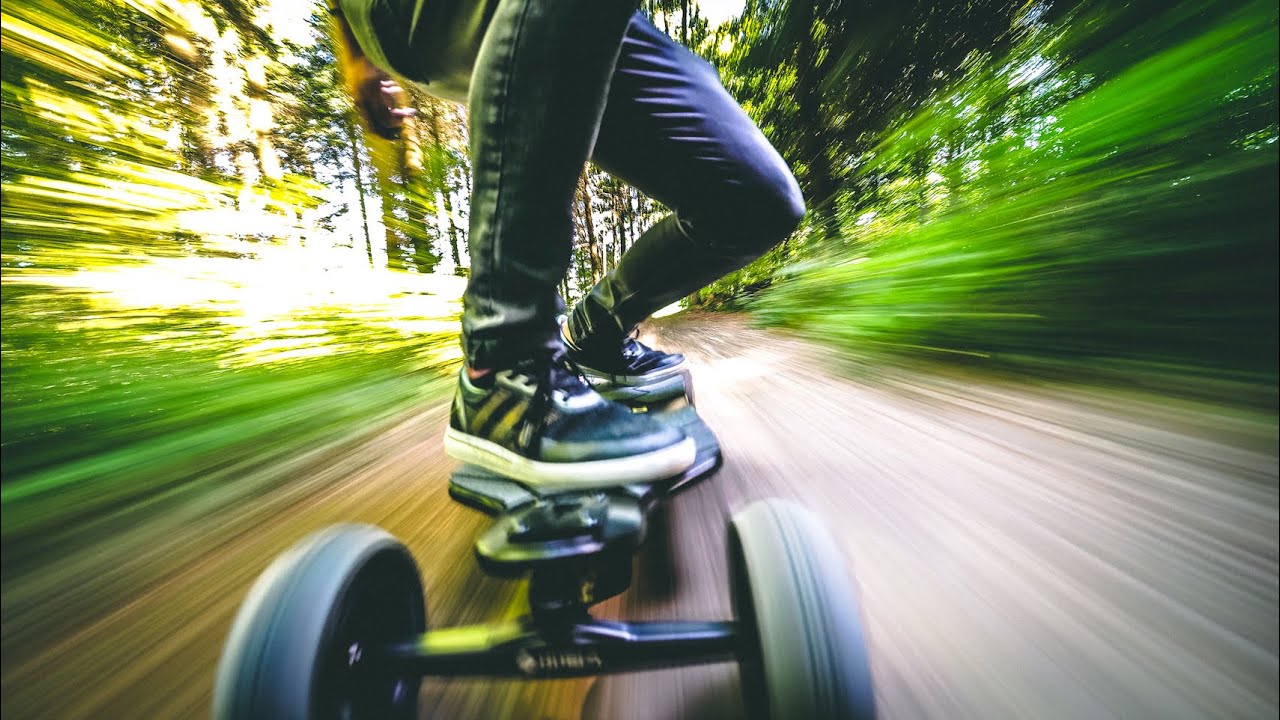
Our AT board review from the ONSRA channel (English). Filmed off-road, outside Canada.
Ontario: the scooter pilot does not include skateboards
Ontario often confuses people because of its e-scooter pilot. Here is the key detail. The pilot regulation, O. Reg. 389/19, defines an "electric kick-scooter" as a vehicle with two wheels in line, a platform for standing, a steering handlebar acting directly on the front wheel, and a motor of no more than 500 watts with a maximum speed of 24 km/h. An electric skateboard has four wheels and no handlebar, so it is not part of the pilot. The province's e-scooter page adds that municipalities must pass a bylaw to opt in, and that the pilot runs until November 27, 2029.
Toronto
The City of Toronto is unusually direct on its other micromobility devices page: electric skateboards "are not allowed on City streets" because "they are not regulated for use on public roads in Ontario". They are also not allowed in bike lanes (painted or protected), not on sidewalks, and "not allowed in City parks and may only be used on private property". Toronto Police Service enforces these rules on City streets.
Other Ontario municipalities follow the same provincial framework. If your town has a private trail network, a bike park or a motorsport facility that welcomes e-boards, that is your playground.

ONSRA photo, shot outside Canada. It is not a statement about where riding is legal in Canada.
Quebec: a pilot project with specs ONSRA boards do not meet
Quebec is the most interesting province, because it actually has a framework that could include electric skateboards. The pilot project on motorized personal transportation devices (ATPM), in force since July 20, 2023 and extended to July 20, 2028 according to the SAAQ, lets some electric devices use certain public roads and bike lanes.
But a device has to meet every requirement to qualify. Among them, from the regulation and the Quebec government page:
- a motor of at most 500 W whose assistance stops at 25 km/h at most;
- a mass of at most 36 kg including the battery;
- wheels at least 190 mm in diameter;
- a brake on each wheel and, except for gyroscopic devices, at least two brake systems with separate controls, one of them mechanical;
- reflectors, and lights at night; rider at least 14, wearing a helmet, max. 25 km/h, and no roads with a speed limit over 50 km/h.
ONSRA boards are performance boards. Their product pages list top speeds of 40 to 65 km/h, and they brake through the motors, not a separate mechanical system. So ONSRA boards do not meet the ATPM requirements and are not covered by the pilot. Outside the pilot, the SAAQ lists skateboards among the things not allowed on the roadway (chaussée).
Montreal
Montreal applies the same provincial rules: a compliant ATPM can use certain streets and bike paths, but a non-compliant board cannot. For ONSRA riders in Montreal, that means private property and permitted sites, just like in Toronto and Vancouver.

ONSRA AT mountain test (English). Filmed in the mountains, outside Canada.
Alberta: private property only
Alberta's official guide Owning and Operating a Small Vehicle in Alberta explains that vehicles which do not fit a defined class are "prohibited miniature vehicles" that "may only be operated on private property". Its examples include personal transporters and electric scooters. The broad definition of "highway" in the Traffic Safety Act includes sidewalks and other places the public is ordinarily allowed to use for vehicles, even privately owned ones such as mall parking lots.
The City of Edmonton puts it plainly: privately owned e-scooters and "other electric micromobility options such as a one-wheel device" are currently prohibited on City streets, bike lanes and sidewalks, because the Traffic Safety Act does not provide for them. Shared rental e-scooters only operate under a special provincial exemption. Calgary works under the same provincial act.
Other provinces and territories
We focused on the four provinces where most of our Canadian riders live. We have not found an official source in any other province that authorizes electric skateboards on public roads. Before you ride anywhere public, check your provincial transportation ministry and your municipality.

ONSRA photo, shot outside Canada. It is not a statement about where riding is legal in Canada.
Forests, mountains and parks: what is actually allowed?
This is where many riders hope for a loophole: "It's not a road, it's a forest trail." Unfortunately, being away from cars does not make public land open to motorized boards.
National parks
Parks Canada keeps motorized devices off trails. In Banff, e-bikes other than pedal-assist e-bikes are not permitted on trails. Elk Island's visitor guidelines say vehicles must remain on hardened surfaces and paved and gravel roads, and that "scooters are considered motor vehicles for these purposes and are not allowed on trails or areas closed to motor vehicle traffic". Riding Mountain National Park says all motorized vehicles must remain on paved and gravel roads. We found no Parks Canada rule that allows electric skateboards on trails, so treat national park trails as off limits.
Provincial parks
BC Parks allows only Class 1 (pedal-assist) e-bikes where cycling is permitted, while throttle e-bikes are "usually allowed where motor vehicles are permitted, such as on roads and off-roading tracks". An electric skateboard is not an e-bike, so do not assume park trails are open to it. In Ontario, the scooter pilot itself counts provincial parks as "public parks" where e-scooters need specific permission, which tells you how cautious the province is.
Crown land and municipal trails
Rules for Crown land, regional districts and municipal trails vary, and we did not find an official source that clearly allows e-skateboards on public forest trails. ICBC's wording ("trails or pathways if permitted by municipal bylaws") shows that the door is open only where a bylaw opens it. If you think a trail might be allowed, ask the land manager or municipality before you ride.
Where it IS fine, and fun: your own land; a friend's acreage, farm or cottage property with their permission; private roads with the owner's OK; private trail networks; bike parks and mountain resorts that allow electric boards (always ask first); private tracks and event venues. Canada has a lot of private land, and an all-terrain board turns a gravel farm lane or a ski hill service road (with the resort's permission) into a playground.

Racing up a mountain with electric skateboards (English). Filmed outside Canada; not a statement about where riding is legal in Canada.
Where it is NOT allowed: quick list
- Public roads and streets in B.C., Ontario, Alberta and (for non-compliant boards) Quebec
- Sidewalks and bike lanes, painted or protected
- Toronto City parks; Vancouver's seawall and park pathways (per the City memo)
- National park trails and areas closed to motor vehicles
- Provincial park trails unless a specific rule allows motorized use
- Private property that the public uses for vehicles (in Alberta, for example, mall parking lots count as "highway")

ONSRA photo, shot outside Canada. It is not a statement about where riding is legal in Canada.
Which board for private land and bike parks?
If you will mostly ride on gravel lanes, grass, forest service roads on private land or bike-park access roads, an all-terrain board with pneumatic tires is the obvious choice. Our Challenger 2.0 All Terrain is the light, kicktail option. The VELAR 2.0 S with 200 mm tires and suspension trucks is the one for broken ground and long days. The BLACK Carve 4 AT sits in between for riders who love a longboard carve. Our Canada buying guide (coming soon) compares them in detail.

ONSRA Challenger 2.0 All Terrain
From US$1,450 (prices shown in USD)
Kicktail, 150 mm pneumatic tires, around 10 kg. Easy to throw in the car and carry on a trail.

ONSRA VELAR 2.0 S
From US$2,990 (prices shown in USD)
200 mm pneumatic tires, suspension trucks, 1036 Wh battery. Our pick for rough private trails.

ONSRA photo, shot outside Canada. It is not a statement about where riding is legal in Canada.
FAQ
Are electric skateboards legal in Canada?
Not on public roads, sidewalks or bike lanes in B.C., Ontario and Alberta, according to official provincial and city sources. Quebec's ATPM pilot only covers devices that meet strict specs (25 km/h, 500 W, 190 mm wheels, mechanical brake), which ONSRA boards do not. Riding on private property with the owner's permission is fine.
Can I ride an electric skateboard on a bike lane in B.C.?
No. ICBC says electric skateboards cannot be operated on public roads, sidewalks or bike lanes in B.C. They can be used on private property without public vehicle access, and on trails or pathways where a municipal bylaw permits it.
Does Ontario's e-scooter pilot include electric skateboards?
No. O. Reg. 389/19 defines an electric kick-scooter as a two-wheeled, standing device with a steering handlebar and a motor of up to 500 W and 24 km/h. Toronto says electric skateboards may only be used on private property.
Can I ride an electric skateboard in Montreal?
Only devices that meet Quebec's ATPM pilot requirements may use certain public roads and bike lanes. ONSRA boards exceed the 25 km/h limit and other specs, so in Montreal they belong on private property and permitted sites.
What is the fine for riding an e-skateboard in B.C.?
The Government of B.C. says you could get a violation ticket and a $598 fine for operating an illegal device on a public road.
Can I ride an electric skateboard in national or provincial parks?
We found no official rule that allows it on trails. Parks Canada keeps motorized devices on roads and off trails, and BC Parks limits throttle devices to places where motor vehicles are permitted.
Where can I legally ride an electric skateboard in Canada?
On private property with the owner's permission, private roads, private trail networks, and bike parks, tracks or mountain resorts that allow electric boards.
Official sources
- Government of B.C.: Emerging modes of personal transportation
- ICBC (B.C. public insurer): Other micromobility
- Government of B.C.: Electric kick scooter rules and safety
- City of Vancouver: memo on legal locations for active transportation devices (2016)
- Ontario e-Laws: O. Reg. 389/19, Pilot Project – Electric Kick-Scooters
- Ontario: Electric kick-style scooters (e-scooters)
- City of Toronto: Other micromobility devices
- LégisQuébec: Projet pilote relatif à l’utilisation des appareils de transport personnel motorisés (ATPM)
- Gouvernement du Québec: Règles pour circuler avec une trottinette électrique ou d’autres ATPM
- SAAQ: Appareils de transport personnel motorisés
- SAAQ: Patins, planche à roulettes et trottinette sans moteur : ce que dit la loi
- Alberta Transportation: Owning and Operating a Small Vehicle in Alberta (PDF)
- City of Edmonton: Shared micromobility program (privately owned e-scooters and other devices)
- Parks Canada: E-bikes, Banff National Park
- Parks Canada: Elk Island National Park visitor guidelines
- Parks Canada: Riding Mountain National Park visitor guidelines
- BC Parks: Cycling (e-bike rules by class)
Checked October 2026. Rules change, and this article is general information, not legal advice. Always check the current rules with your province and municipality.

Electric Skateboard Laws in the UK: Where You Can Legally Ride in 2026
Electric Skateboard Laws in the UK: Where You Can Legally Ride in 2026