One of the biggest decisions when buying an electric skateboard is choosing street wheels or all-terrain (AT) wheels. They change how your board feels, rides and handles rough surfaces.
Street wheels are solid wheels for paved roads: classic polyurethane (PU), our dual-durometer TARMAX 100 mm and our soft 115 mm rubber wheels. All-terrain wheels are air-filled pneumatic tires, usually 150 to 200 mm, for gravel, dirt and broken roads. Here is how to decide.

Street Wheels – Efficient, Precise and Low
Street wheels are smaller, lighter and roll more efficiently. They keep the deck low, feel precise in carves and are the right choice if you mostly ride paved roads.
Why riders choose street wheels:
- Sharper, more reactive carving and a lower ride height
- Easier to slide and kick out corners (especially on PU)
- Lighter, quicker acceleration and more range on smooth roads
- No flats and no tire pressure to check
Not all street wheels feel the same. ONSRA offers three levels of street comfort:
- Standard PU: the most direct feel, but every crack comes through on rough asphalt.
- TARMAX 100 mm: a dual-durometer PU wheel, 76A on the inside and 72A on the outer edge, with the outer edge 2 mm smaller in diameter than the inside. Riding straight, you roll mainly on the harder inner part, which helps range. Leaning into a carve, the softer outer edge grips. Stock on the Challenger 2.0 Street.
- 115 mm rubber wheels: 115 × 65 mm, 70A. Still a solid street wheel, not an all-terrain wheel, but the softest and smoothest one we make and ideal for rough city asphalt. Expect roughly 20 to 30% less range than with PU. Stock on the BLACK Carve 4 Street.

All-Terrain (AT) Wheels – Comfort, Grip and Clearance
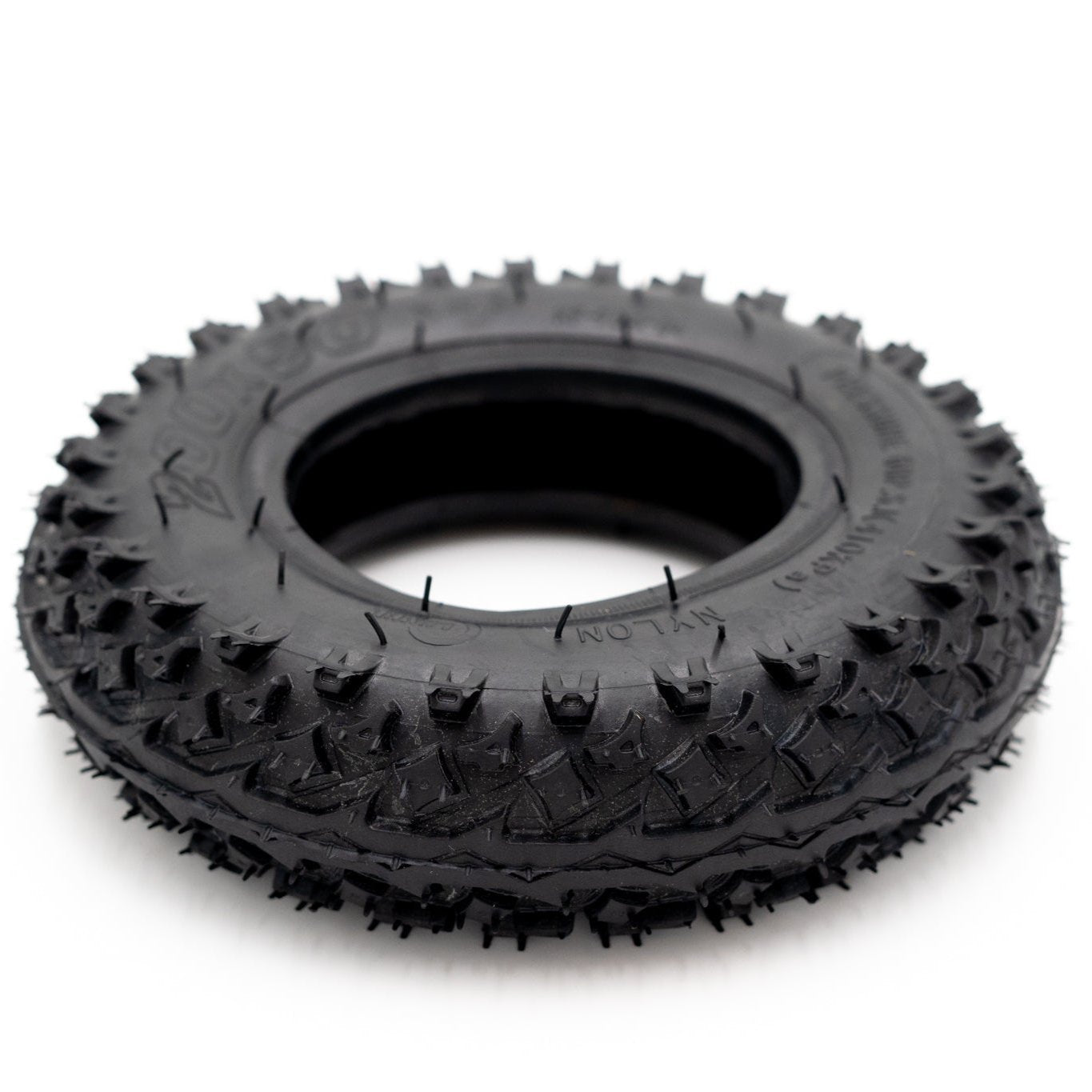
All-terrain wheels are pneumatic tires on a hub, typically 150 to 200 mm. The air cushion absorbs bumps that no solid wheel can, and the tread grips on gravel, dirt and grass.
Why riders choose AT wheels:
- The smoothest ride over cracks, cobblestones and broken pavement
- Rides gravel, dirt paths and grass
- More ground clearance
- Very forgiving and stable, a confidence boost for many new riders
The trade-offs: more weight and rolling resistance, a higher deck, tire pressure to check and the occasional flat. AT setups come stock on boards like the VELAR 2.0, the BLACK Carve 4 AT and the Challenger 2.0 AT.

Comfort vs Performance
| Feature | PU street | TARMAX 100 mm (street) | Rubber 115 mm (street) | All-terrain (pneumatic) |
|---|---|---|---|---|
| Ride comfort | Low | Medium | High | Highest |
| Efficiency & range | Very high | High | Medium | Lower |
| Terrain | Smooth roads | Smooth to rough asphalt | Rough asphalt | Gravel, dirt, broken roads |
| Ride height | Low | Low | Low | High |
| Slide control | Excellent | Moderate | Low | Low |
| Maintenance | Very low | Very low | Very low | Tire pressure, possible flats |
Which Wheels Should You Choose?
- Mostly smooth roads, and you want range and precision: PU or TARMAX street wheels.
- Paved but rough city roads, and you want comfort without going AT: 115 mm rubber street wheels.
- Gravel, dirt, cobblestones or maximum comfort: all-terrain pneumatic tires.
- New to electric skateboarding: a soft street setup (TARMAX or rubber) if you stay on paved roads, or AT if your routes are rough. Both are forgiving.

Conclusion
The street vs all-terrain decision comes down to where you ride. On paved roads, a street setup wins, from precise PU through TARMAX to our very soft 115 mm rubber wheels. Off pavement, or when comfort beats everything, all-terrain pneumatic tires are the answer.
Comparing complete boards instead of wheels? Read All-Terrain vs Street Eskate.
Belt Drive vs Gear Drive – Which ONSRA VELAR Setup Is Best for You?
ONSRA E-Skate Gloves – Protection, Control & Style for Every Rider (EUC, Motorcycle & More)